

A plain-language breakdown of how TV lift mechanisms work the motor, the mount, and the safety features that keep your TV moving smoothly.
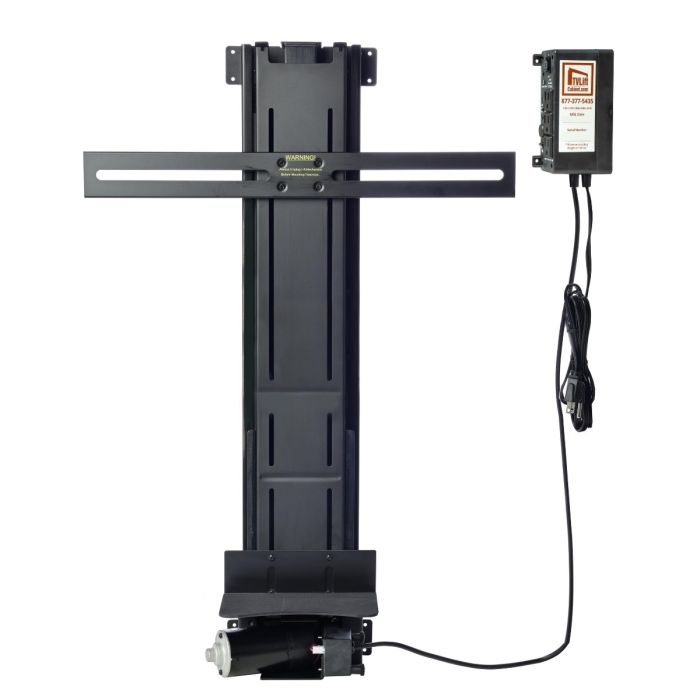
At its core, a TV lift mechanism is a motorized system that raises a mounted TV vertically out of a cabinet, and lowers it back down, on command.
The main components:
- Linear actuator or scissor-lift motor — the drive system that generates vertical movement. Linear actuators use a motor-driven screw or rod; scissor mechanisms use a folding metal lattice that extends and collapses.
- Mounting bracket — attaches the TV (standard VESA pattern) to the top of the lift carriage
- Guide rails — keep the TV moving in a straight, stable vertical path without wobble
- Control system — a remote, wall switch, or app that sends the raise/lower signal
- Safety sensors — most quality mechanisms include obstruction detection, which stops or reverses the lift if it meets resistance (a hand, a pet, a stray cable)
How it moves: When you trigger the lift, the motor drives the actuator or scissor arms, pushing the mounting bracket and the TV up through an opening in the cabinet top. Reversing the motor lowers it back down and out of sight.
Why it matters for buyers: Mechanism quality is the single biggest factor in long-term reliability. A well-built lift should run quietly, move smoothly without jerking, and include obstruction safety — details that separate a cabinet that lasts a decade from one that needs repairs in year two.