

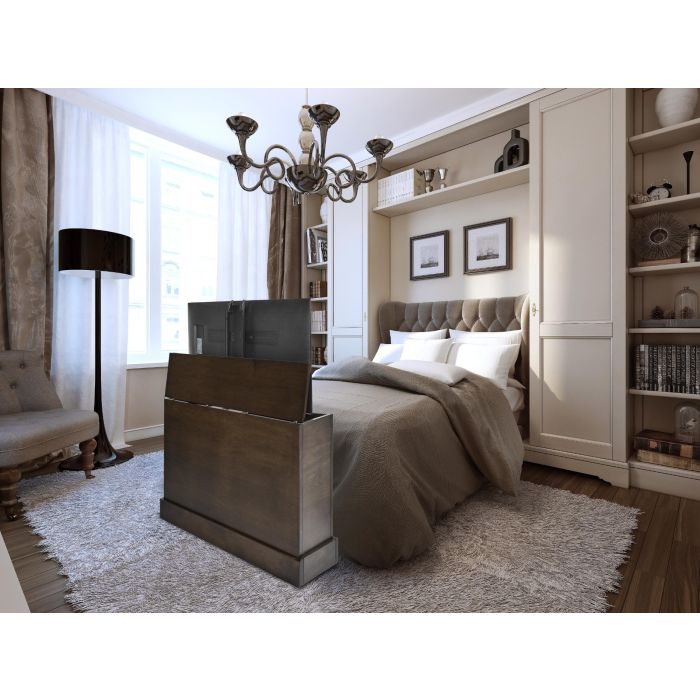
End-of-bed viewing distances are shorter than living rooms, which changes the math on what TV size actually makes sense. A full sizing guide.
Bedroom viewing distances are almost always shorter than living room distances, and that changes the sizing math in a way a lot of buyers don't account for when they default to "bigger is better."
Measure your actual viewing distance first
Measure from your typical head position while sitting up in bed (propped against pillows, which is the most common bedroom TV-watching posture) to where the cabinet will sit. Most bedrooms land somewhere in the 6-10 foot range — noticeably shorter than a typical living room's 10-15+ foot distance.
Applying the sizing formula to bedroom distances
Using the same general 1.5x-2.5x viewing distance guideline used for any room, an 8-foot (96-inch) bedroom viewing distance suggests a TV in the roughly 40"-55" range — meaningfully smaller than what the same formula would suggest for a living room's longer distance.
Why oversizing backfires in a bedroom specifically
A TV that's too large for a short viewing distance isn't just aesthetically disproportionate — it can genuinely cause eye strain and discomfort during the reclined, close-range viewing position typical in bedrooms, where your eyes are working harder to take in a display that's both large and close.
Cabinet width follows TV size, not the other way around
Once you've settled on an appropriately sized TV for your actual viewing distance, confirm the cabinet width comfortably accommodates it with the manufacturer's recommended clearance — a TV mounted at or beyond a cabinet's rated width maximum can affect both aesthetics and the mechanism's ability to operate smoothly.
A note on multi-purpose bedrooms
If your bedroom occasionally serves a secondary purpose — a small home office corner, a spot where you also watch content from across the room rather than from bed — factor that longer secondary viewing distance into your decision, and consider sizing toward the upper end of the appropriate range rather than the lower end.
A practical range to work from
For most primary bedrooms with a standard end-of-bed cabinet placement, 43"-55" TVs represent the most proportionate and comfortable range. Larger primary suites with genuinely longer sightlines can reasonably go up to 65", but this is the exception rather than the average bedroom setup.