

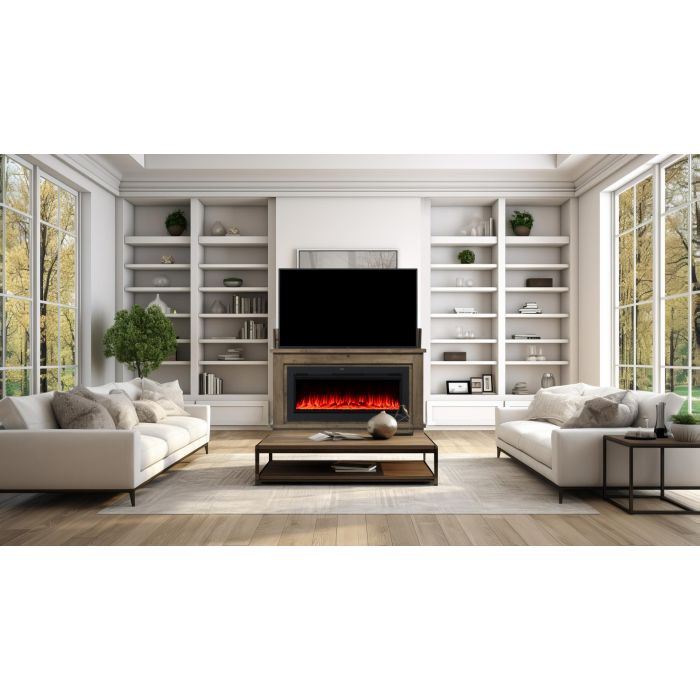
Every living room needs a focal point, and in winter, the competition usually comes down to two options: the fireplace or the TV. Instead of choosing one, more homeowners are finding a third option: let the fireplace anchor the room and let the TV disappear when it's not needed.
The Case for the Fireplace as Anchor
A fireplace brings warmth, both literal and visual, that a television can't replicate. It also tends to work year-round as a design feature even when it's not lit, which is more than can be said for a dark, empty screen mounted above it.
The Problem with Mounting a TV Over the Fireplace
Mounting a television above a fireplace is common, but it comes with real downsides: awkward neck angles from typical seating height, heat exposure that can shorten a TV's lifespan, and a design conflict where neither the fire nor the screen gets to be the room's real focal point.
Where a TV Lift Cabinet Fits In
A TV lift cabinet placed to the side of or opposite the fireplace lets both features exist without competing:
- The fireplace stays the visual anchor during the day and during gatherings
- The TV rises only when needed, at a comfortable eye level unrelated to the fireplace's height
- Neither element is compromised by trying to serve two purposes at once, like a mantel TV mount does
Seasonal Considerations
In winter, when the fireplace sees the most use, having the TV hidden means evenings by the fire aren't visually competing with a screen. In warmer months, when the fireplace goes quiet, the lift cabinet can become the room's more active feature.
Making the Choice
If your fireplace is a wood-burning or gas unit with real seasonal use, let it anchor the room and give the TV its own cabinet nearby. If the fireplace is decorative or rarely used, a lift cabinet can take the lead role instead, with the fireplace as a secondary feature.
Explore our living room cabinet collection, including models designed to complement a fireplace rather than compete with it.