

How Quiet Is a TV Lift Cabinet Motor?
-
Lift Mechanism Basics: Quiet Motorized Kits for DIY Builds vs Finished Cabinets
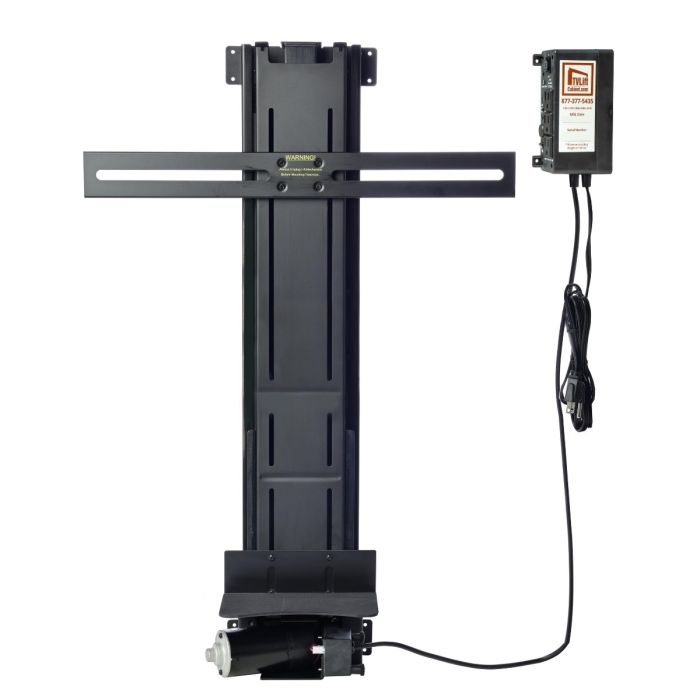
A TV lift mechanism is the motorized heart of any pop-up cabinet. Understanding what that kit does helps you choose between a DIY furniture project and a finished cabinet that arrives ready to live with. Quiet travel, stable mounting, and clean cable management matter as much as the wood case around them.
At a basic level, the mechanism raises and lowers a platform or bracket that holds the television. You control it with a remote, switch, or integrated control depending on the kit. Good mechanisms emphasize smooth motion and low noise so the lift feels like furniture, not garage-door hardware. Load rating, travel height, and mounting pattern must match your TV weight and size. If those numbers are off, the screen can wobble, strain the motor, or fail to clear the cabinet lid cleanly.
DIY buyers often already have a carpenter, a custom millwork plan, or a prized antique they want to convert. In that lane, a lift mechanism kit can be the right purchase. You still need precise cabinet interior
Posted on: September 22, 2026Posted by: Jenn Mann -
How Quiet Is the Motor in a TV Lift Cabinet?
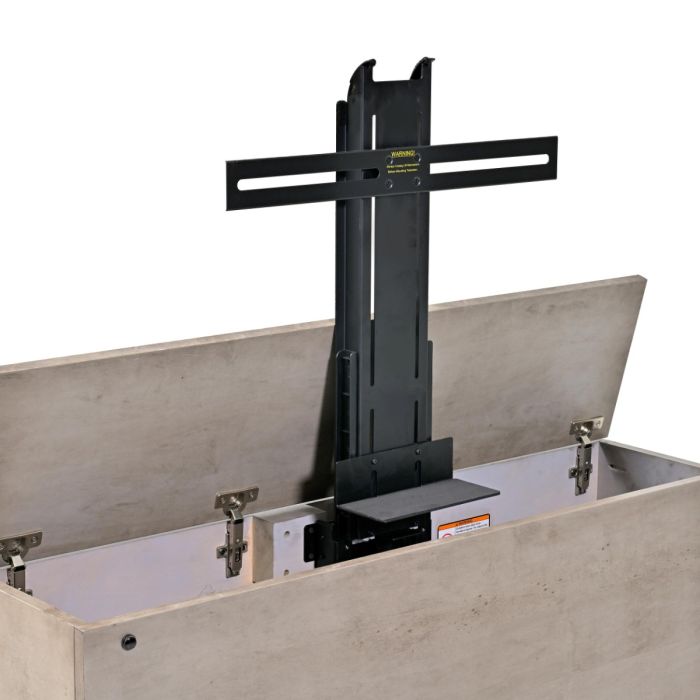
One of the first things people want to know when considering a TV lift cabinet is: "Is it going to sound like a garage door opening in my bedroom?" The answer, for quality cabinets, is emphatically no.
The Sound Profile of a Good Lift Motor
Quality TV lift mechanisms use DC brushless motors paired with precision lead screws or column drives. These create a smooth, low-frequency hum — not a whirring, grinding, or clanking sound. The travel time from fully closed to fully raised typically takes 8 to 15 seconds depending on the mechanism, and during that time the sound is constant and subdued.
At 35–45 dB, you're hearing something quieter than a running refrigerator and far quieter than a conversation. In a bedroom at night, you'll hear it — but it won't startle you or anyone else in the room.
What Makes a Lift Mechanism Louder?
The main culprits in noisy lift cabinets are:
- Brushed DC motors — older technology, more friction, more noise
- Loose mechanical tolerances — cheap manufacturing allows
Categories: TV lift motor , motorized TV cabinet , noise level , How Quiet Is a TV Lift Cabinet Motor?Posted on: June 23, 2026Posted by: Jenn Mann