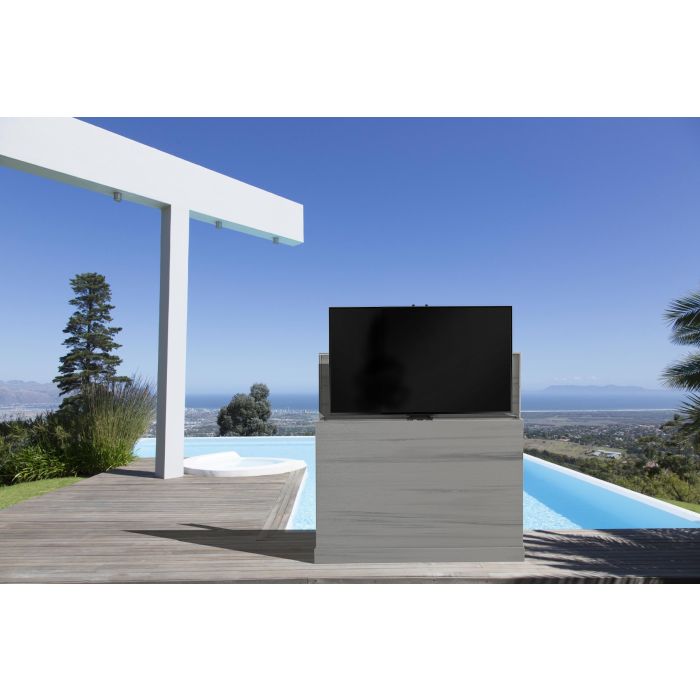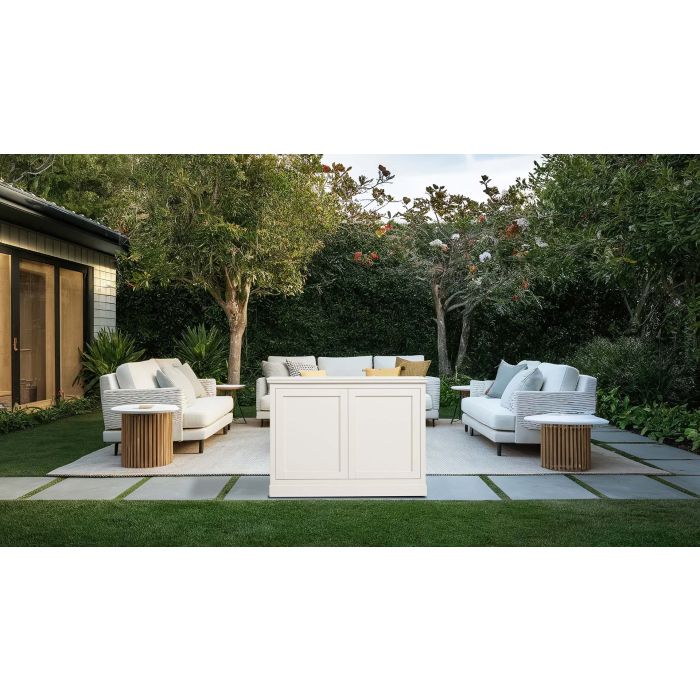

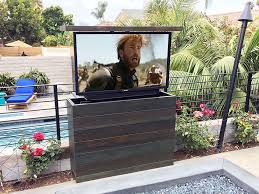
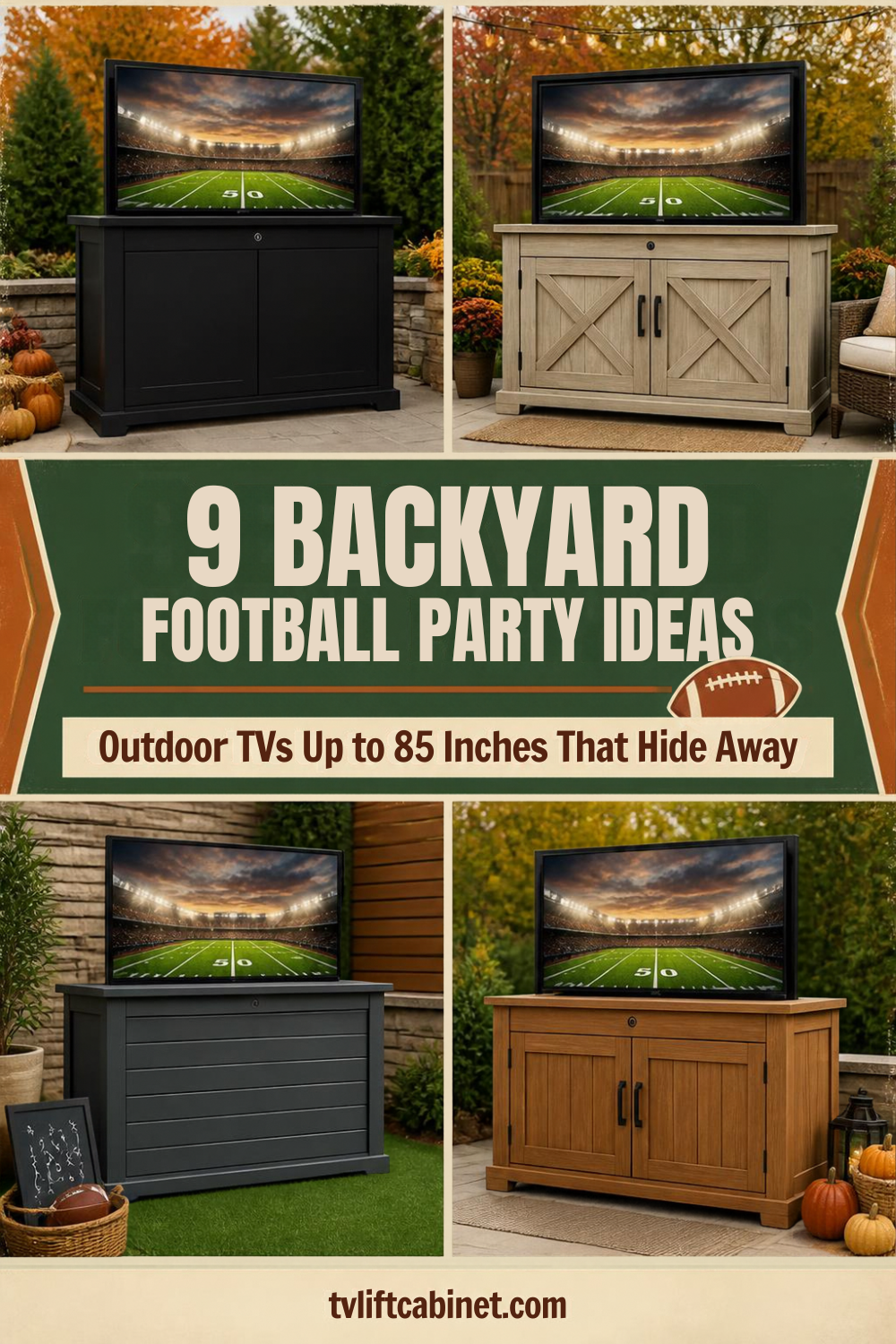
Outdoor viewing distances, sunlight, and weatherproofing all affect what TV size actually makes sense for your outdoor lift cabinet. Here's how to size it right.
Outdoor TV sizing follows different logic than indoor sizing, mostly because outdoor spaces tend to have longer viewing distances and more ambient light to compete with.
Outdoor seating areas — patios, decks, poolside lounges — often place viewers farther from the screen than a typical living room does. As a general guide, divide your viewing distance (in inches) by 1.5 to 2.5 to estimate an appropriate screen size; a 12-foot viewing distance (144 inches) suggests something in the 55"-65" range, while a more intimate 8-foot patio setup works well with a 50"-55" screen.
Even a well-sized TV can feel washed out in direct afternoon sun. If your outdoor space gets significant direct sunlight during typical viewing hours, prioritize a brighter, sun-readable display
Outdoor TV lift cabinets face sun, moisture, and temperature swings that indoor units never see. Here's a realistic look at their lifespan and what affects it most.
Homeowners considering an outdoor TV lift cabinet almost always ask some version of the same question: is this actually going to hold up, or will I be replacing it in a couple of years? The honest answer depends heavily on materials, climate, and how much genuine cover the cabinet gets — but there are real benchmarks to work from.
A well-built HDPE or marine-grade polymer cabinet shell, kept reasonably clear of standing water and not left in constant direct sun without any cover, can realistically last 10+ years without significant material degradation. HDPE doesn't rot, warp with moisture, or support mold growth the way wood does, and it resists UV fading far longer than standard outdoor plastics or laminates.
The cabinet shell tends to outlast the mechanism
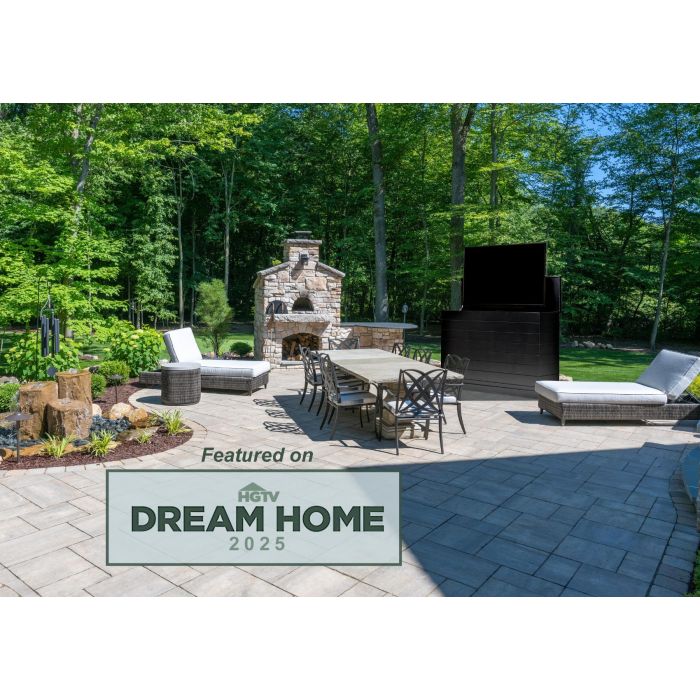
A step-by-step guide to building a full outdoor entertainment center around your TV lift cabinet layout, seating, sound, and power.
A TV lift cabinet is the anchor of an outdoor entertainment center, but the setup around it determines whether the space actually gets used.
Step 1: Pick the location. Choose a spot with some cover (roof overhang, pergola, or covered patio) and reasonable proximity to an outdoor-rated power source. Avoid full afternoon sun exposure on the cabinet itself if you can — even weatherproof units last longer out of constant direct heat.
Step 2: Plan sightlines. Seating should sit within a comfortable viewing arc, generally within 1.5–2.5x the screen's diagonal size for optimal viewing distance.
Step 3: Handle power and cable routing before anything else. Run outdoor-rated conduit for power and any wired audio connections. This is far easier to do before furniture and landscaping go in.
Step 4: Add audio. A weatherproof soundbar or in-cabinet speaker storage solves
Yes — there are TV lift cabinets specifically engineered for outdoor use, built with weather-resistant materials, sealed electronics, and UV-stable finishes designed to withstand the elements. Standard indoor TV lift cabinets are not suitable for outdoor installation because they use materials and electronics not rated for moisture, temperature swings, or UV exposure. For any outdoor application — covered patio, poolside, or outdoor kitchen — you need a cabinet specifically rated for outdoor use.
Outdoor living spaces have become a major focus in home design, and the demand for outdoor entertainment — including concealed outdoor TVs — has grown right along with it. TV lift cabinets designed for outdoor environments bring the same clean aesthetic benefit as their indoor counterparts, but they're engineered to handle an entirely different set of challenges.
Indoor TV lift cabinets are built with interior-grade materials: