Made by Us, For Your Home | $200 Off Cabinets & $50 Off Lifts

Page 131 - Blog
-
Mitsubishi Offers a Fix for Dated 3-D Samsung TV Sets
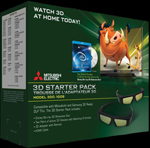
Both Mitsubishi and Samsung have been producing 3-D-ready TVs for years. However, back when they first starting making and selling their 3-D TVs, the 3-D technology was much different than it is today. The result was that their TVs simply no longer worked with today’s technology, so the companies had to send out upgrade kits to be compatible.
Late last year, Mitsubishi released an upgrade kit for its DLP TVs, which is a technology no longer used by any TV manufacturer except Mitsubishi. These DLP TVs are adequate in quality, but they are often much thicker than today’s flat-screens. Their two-feet deep sets are no good for placement in TV lift cabinets. However, the company believes in the technology and will, in 2011, be releasing a 92-inch 3-D TV in DLP for under $6K.
But back to the upgrade kit, the 3D Starter Pack. The pack will work for both Mitsubishi and Samsung 3-D-ready DLP TVs (not including plasma models), and it comes with two pairs of active-shutter 3-D eyewear, a 3-D emitter,
Categories: TV , TV lift cabinets , DLP , Disney , Mitsubishi , samsung , Mitsubishi 3-D Starter PackPosted on: February 15, 2011Posted by: Kerry Mann -
Walter Murch, the Original Mr. 3-D, Talks About the Challenges of 3-D Technology
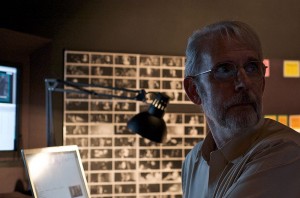
Film sound and editing legend, Walter Murch, recently expounded on the virtues, challenges and future of 3-D technology in the entertainment industry. Murch, who is respected for his Academy Award-winning work on “Apocalypse Now” and Oscar-winning editing and sound mixing work on “The English Patient,” recently wrote a letter to film critic Roger Ebert about the world of 3-D.
Murch’s own history with 3-D technology started back in 1986 when he edited the 3-D version of Michael Jackson’s “Captain Eo,” which was directed by Francis Ford Coppola and shown at Disney theme parks. Many actually claim this film was “4-D” since it incorporated so many in-theater effects (lasers, smoke, etc.) synched to the film’s narrative.
In the letter he wrote to Ebert, Murch explains that the biggest obstacle in producing 3-D films is the “convergence/focus issue.” As a viewer watches a 3-D film, different “planes” are apparent to the viewer, and though the viewer him or herself is not changing their location
Posted on: February 14, 2011Posted by: Kerry Mann -
Meet The Team
Out of the answers below, can you guess why people are hesitant to buy online?
A. Cannot see the product in person.
B. Does the finish look exactly as it does online?
C. Concerns over online security.
D. Do not feel comfortable doing business with people they have not had the opportunity to meet face to face.
E. All of the above.
If you answered “E”, then you share the same concerns of many. It can be quite nerve wracking to make a purchase sight unseen with an unfamiliar company.
As an online furniture company, we face these hurdles every day when speaking with our customers. It is extremely important to us to make sure our customers feel comfortable when making their purchases. That is why we make sure to address each and every one of these reservations.
For starters, did you know that we can send you wood-finish samples of any our TV lift cabinets? Yes, it is absolutely true! To ensure our customers select the right TV lift cabinet
Posted on: February 14, 2011Posted by: Kerry Mann -
Walter Murch, the Original Mr. 3-D, Talks About the Challenges of 3-D Technology
Film sound and editing legend, Walter Murch, recently expounded on the virtues, challenges and future of 3-D technology in the entertainment industry. Murch, who is respected for his Academy Award-winning work on “Apocalypse Now” and Oscar-winning editing and sound mixing work on “The English Patient,” recently wrote a letter to film critic Roger Ebert about the world of 3-D.
Murch’s own history with 3-D technology started back in 1986 when he edited the 3-D version of Michael Jackson’s “Captain Eo,” which was directed by Francis Ford Coppola and shown at Disney theme parks. Many actually claim this film was “4-D” since it incorporated so many in-theater effects (lasers, smoke, etc.) synched to the film’s narrative.
In the letter he wrote to Ebert, Murch explains that the biggest obstacle in producing 3-D films is the “convergence/focus issue.” As a viewer watches a 3-D film, different “planes” are apparent to the viewer, and though the viewer him or herself is not changing their location
Posted on: February 14, 2011Posted by: Kerry Mann -
Walter Murch, the Original Mr. 3-D, Talks About the Challenges of 3-D Technology
Film sound and editing legend, Walter Murch, recently expounded on the virtues, challenges and future of 3-D technology in the entertainment industry. Murch, who is respected for his Academy Award-winning work on “Apocalypse Now” and Oscar-winning editing and sound mixing work on “The English Patient,” recently wrote a letter to film critic Roger Ebert about the world of 3-D.
Murch’s own history with 3-D technology started back in 1986 when he edited the 3-D version of Michael Jackson’s “Captain Eo,” which was directed by Francis Ford Coppola and shown at Disney theme parks. Many actually claim this film was “4-D” since it incorporated so many in-theater effects (lasers, smoke, etc.) synched to the film’s narrative.
In the letter he wrote to Ebert, Murch explains that the biggest obstacle in producing 3-D films is the “convergence/focus issue.” As a viewer watches a 3-D film, different “planes” are apparent to the viewer, and though the viewer him or herself is not changing their location
Posted on: February 14, 2011Posted by: Kerry Mann -
Meet The Team
Out of the answers below, can you guess why people are hesitant to buy online?
A. Cannot see the product in person.
B. Does the finish look exactly as it does online?
C. Concerns over online security.
D. Do not feel comfortable doing business with people they have not had the opportunity to meet face to face.
E. All of the above.
If you answered “E”, then you share the same concerns of many. It can be quite nerve wracking to make a purchase sight unseen with an unfamiliar company.
As an online furniture company, we face these hurdles every day when speaking with our customers. It is extremely important to us to make sure our customers feel comfortable when making their purchases. That is why we make sure to address each and every one of these reservations.
For starters, did you know that we can send you wood-finish samples of any our TV lift cabinets? Yes, it is absolutely true! To ensure our customers select the right TV lift cabinet
Posted on: February 14, 2011Posted by: Kerry Mann -
Meet The Team
Out of the answers below, can you guess why people are hesitant to buy online?
A. Cannot see the product in person.
B. Does the finish look exactly as it does online?
C. Concerns over online security.
D. Do not feel comfortable doing business with people they have not had the opportunity to meet face to face.
E. All of the above.
If you answered “E”, then you share the same concerns of many. It can be quite nerve wracking to make a purchase sight unseen with an unfamiliar company.
As an online furniture company, we face these hurdles every day when speaking with our customers. It is extremely important to us to make sure our customers feel comfortable when making their purchases. That is why we make sure to address each and every one of these reservations.
For starters, did you know that we can send you wood-finish samples of any our TV lift cabinets? Yes, it is absolutely true! To ensure our customers select the right TV lift cabinet
Posted on: February 14, 2011Posted by: Kerry Mann -
FCC “OKs” Comcast-NBC Merger, Comcast Now the Largest Media Conglomerate

The lines of division are even blurrier now, at least in terms of who will be providing your cable and Internet service in 2011. The FCC recently approved a Comcast-NBC merger, citing that it did not violate U.S. antitrust laws. So should you expect to see a change in your service when you come home one afternoon next week to watch a show in front of your TV lift cabinet? Probably not. What this merger means is that Comcast now has majority ownership of NBC and its media properties, which includes a piece of TV-streaming giant, Hulu.
The specifics of the merger are an agreement between Comcast and General Electric, which owns the majority of NBC Universal. The merger was approved by the FCC by a 4-1 vote, and Comcast will acquire 51% of NBC Universal for approximately $13.75 billion. This deal has been in the works for more than a year.
One of the major concerns over this deal before it was passed was to make sure it did not hinder or hamper the continuing growth of online video. The FCC
Categories: PressPosted on: February 11, 2011Posted by: Kerry Mann -
FCC “OKs” Comcast-NBC Merger, Comcast Now the Largest Media Conglomerate
The lines of division are even blurrier now, at least in terms of who will be providing your cable and Internet service in 2011. The FCC recently approved a Comcast-NBC merger, citing that it did not violate U.S. antitrust laws. So should you expect to see a change in your service when you come home one afternoon next week to watch a show in front of your TV lift cabinet? Probably not. What this merger means is that Comcast now has majority ownership of NBC and its media properties, which includes a piece of TV-streaming giant, Hulu.
The specifics of the merger are an agreement between Comcast and General Electric, which owns the majority of NBC Universal. The merger was approved by the FCC by a 4-1 vote, and Comcast will acquire 51% of NBC Universal for approximately $13.75 billion. This deal has been in the works for more than a year.
One of the major concerns over this deal before it was passed was to make sure it did not hinder or hamper the continuing growth of online video. The FCC
Posted on: February 11, 2011Posted by: Kerry Mann -
FCC “OKs” Comcast-NBC Merger, Comcast Now the Largest Media Conglomerate
The lines of division are even blurrier now, at least in terms of who will be providing your cable and Internet service in 2011. The FCC recently approved a Comcast-NBC merger, citing that it did not violate U.S. antitrust laws. So should you expect to see a change in your service when you come home one afternoon next week to watch a show in front of your TV lift cabinet? Probably not. What this merger means is that Comcast now has majority ownership of NBC and its media properties, which includes a piece of TV-streaming giant, Hulu.
The specifics of the merger are an agreement between Comcast and General Electric, which owns the majority of NBC Universal. The merger was approved by the FCC by a 4-1 vote, and Comcast will acquire 51% of NBC Universal for approximately $13.75 billion. This deal has been in the works for more than a year.
One of the major concerns over this deal before it was passed was to make sure it did not hinder or hamper the continuing growth of online video. The FCC
Posted on: February 11, 2011Posted by: Kerry Mann


