Made by Us, For Your Home | $200 Off Cabinets & $50 Off Lifts

Page 130 - Blog
-
Product Focus: Restoration TV Lift Cabinet
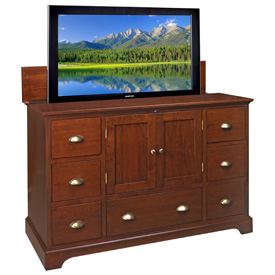
An exquisite example of traditional styling meets modernized functionality, the Restoration TV Lift Cabinet is a multi-step stained and scratch-resistant hardwood TV lift cabinet that is sure to impress, delight and get heavy use.
The Restoration TV Lift Cabinet comes complete with a pre-installed TV lift mechanism capable of quietly raising and lowering a flat-screen TV weighing up to an impressive 130 pounds and measuring 54” wide. The cabinet itself is hand-built from American Maple, and it can be placed against any wall in your home, including a home office or bedroom. The base molding conceals non-marking feet so you can easily move the cabinet for cleaning or rearranging.
The two center cabinet doors come with interchangeable cloth speaker panels for speaker storage, and the built-in shelf ventilation will keep your media players cool even when being used at peak levels. The included radio frequency remote control for the TV lift comes ready to work, with no programming required.
Posted on: February 17, 2011Posted by: Kerry Mann -
Product Focus: Restoration TV Lift Cabinet
An exquisite example of traditional styling meets modernized functionality, the Restoration TV Lift Cabinet is a multi-step stained and scratch-resistant hardwood TV lift cabinet that is sure to impress, delight and get heavy use.
The Restoration TV Lift Cabinet comes complete with a pre-installed TV lift mechanism capable of quietly raising and lowering a flat-screen TV weighing up to an impressive 130 pounds and measuring 54” wide. The cabinet itself is hand-built from American Maple, and it can be placed against any wall in your home, including a home office or bedroom. The base molding conceals non-marking feet so you can easily move the cabinet for cleaning or rearranging.
The two center cabinet doors come with interchangeable cloth speaker panels for speaker storage, and the built-in shelf ventilation will keep your media players cool even when being used at peak levels. The included radio frequency remote control for the TV lift comes ready to work, with no programming required.
Posted on: February 17, 2011Posted by: Kerry Mann -
Can You Watch 3-D without 3-D Glasses? Toshiba Thinks So
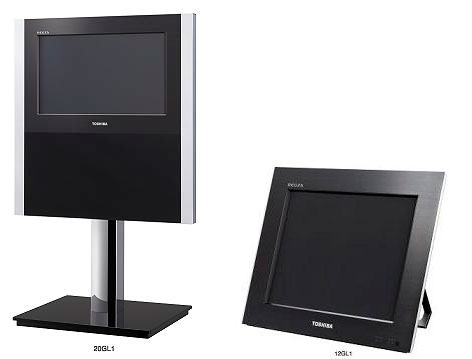
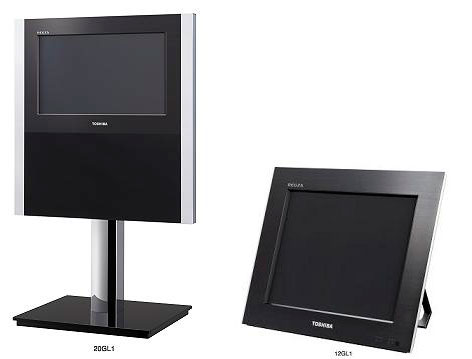 Founded on an idea Reiko Fukushima had nine years ago, coming back to work after maternity leave, Toshiba is now leading the charge on supplying the world’s first “naked-eye” 3-D TV. Recently covered in an interview with Fukushima in The New York Times, the progress of these developing technologies has done two things in Japan – sparked new heights for high-tech women researchers in that country and given confidence to all who were skeptical that a “naked-eye” technology could ever be developed.
Toshiba itself was skeptical when Fukushima first presented them the idea, but now last October at the Consumer Electronics Show in Las Vegas, the prototype of the 3-D TV was unveiled. It was always clear to Fukushima that 3-D glasses would have to go in order for the technology to truly take off, and her approach to the problem was to develop an algorithm that drew on a Toshiba imaging processor, named the “Cell,” to display nine different images for each frame. A sheet on the TV screen, called
Categories: PressPosted on: February 16, 2011Posted by: Kerry Mann -
Can You Watch 3-D without 3-D Glasses? Toshiba Thinks So
Founded on an idea Reiko Fukushima had nine years ago, coming back to work after maternity leave, Toshiba is now leading the charge on supplying the world’s first “naked-eye” 3-D TV. Recently covered in an interview with Fukushima in The New York Times, the progress of these developing technologies has done two things in Japan – sparked new heights for high-tech women researchers in that country and given confidence to all who were skeptical that a “naked-eye” technology could ever be developed.Toshiba itself was skeptical when Fukushima first presented them the idea, but now last October at the Consumer Electronics Show in Las Vegas, the prototype of the 3-D TV was unveiled. It was always clear to Fukushima that 3-D glasses would have to go in order for the technology to truly take off, and her approach to the problem was to develop an algorithm that drew on a Toshiba imaging processor, named the “Cell,” to display nine different images for each frame. A sheet on the TV screen, called
Categories: Press , TV lift cabinet , Pop Up TV Cabinet , Toshiba , Glassless 3-D TVs , naked-eye 3-D , FukushimaPosted on: February 16, 2011Posted by: Kerry Mann -
Can You Watch 3-D without 3-D Glasses? Toshiba Thinks So
Founded on an idea Reiko Fukushima had nine years ago, coming back to work after maternity leave, Toshiba is now leading the charge on supplying the world’s first “naked-eye” 3-D TV. Recently covered in an interview with Fukushima in The New York Times, the progress of these developing technologies has done two things in Japan – sparked new heights for high-tech women researchers in that country and given confidence to all who were skeptical that a “naked-eye” technology could ever be developed.Toshiba itself was skeptical when Fukushima first presented them the idea, but now last October at the Consumer Electronics Show in Las Vegas, the prototype of the 3-D TV was unveiled. It was always clear to Fukushima that 3-D glasses would have to go in order for the technology to truly take off, and her approach to the problem was to develop an algorithm that drew on a Toshiba imaging processor, named the “Cell,” to display nine different images for each frame. A sheet on the TV screen, called
Categories: Press , TV lift cabinet , Pop Up TV Cabinet , Toshiba , Glassless 3-D TVs , naked-eye 3-D , FukushimaPosted on: February 16, 2011Posted by: Kerry Mann -
Mitsubishi Offers a Fix for Dated 3-D Samsung TV Sets
Both Mitsubishi and Samsung have been producing 3-D-ready TVs for years. However, back when they first starting making and selling their 3-D TVs, the 3-D technology was much different than it is today. The result was that their TVs simply no longer worked with today’s technology, so the companies had to send out upgrade kits to be compatible.
Late last year, Mitsubishi released an upgrade kit for its DLP TVs, which is a technology no longer used by any TV manufacturer except Mitsubishi. These DLP TVs are adequate in quality, but they are often much thicker than today’s flat-screens. Their two-feet deep sets are no good for placement in TV lift cabinets. However, the company believes in the technology and will, in 2011, be releasing a 92-inch 3-D TV in DLP for under $6K.
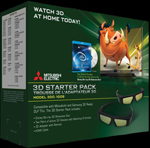
But back to the upgrade kit, the 3D Starter Pack. The pack will work for both Mitsubishi and Samsung 3-D-ready DLP TVs (not including plasma models), and it comes with two pairs of active-shutter 3-D eyewear, a 3-D emitter,
Categories: TVPosted on: February 15, 2011Posted by: Kerry Mann -
Mitsubishi Offers a Fix for Dated 3-D Samsung TV Sets
Both Mitsubishi and Samsung have been producing 3-D-ready TVs for years. However, back when they first starting making and selling their 3-D TVs, the 3-D technology was much different than it is today. The result was that their TVs simply no longer worked with today’s technology, so the companies had to send out upgrade kits to be compatible.
Late last year, Mitsubishi released an upgrade kit for its DLP TVs, which is a technology no longer used by any TV manufacturer except Mitsubishi. These DLP TVs are adequate in quality, but they are often much thicker than today’s flat-screens. Their two-feet deep sets are no good for placement in TV lift cabinets. However, the company believes in the technology and will, in 2011, be releasing a 92-inch 3-D TV in DLP for under $6K.
But back to the upgrade kit, the 3D Starter Pack. The pack will work for both Mitsubishi and Samsung 3-D-ready DLP TVs (not including plasma models), and it comes with two pairs of active-shutter 3-D eyewear, a 3-D emitter,
Categories: TV , TV lift cabinets , DLP , Disney , Mitsubishi , samsung , Mitsubishi 3-D Starter PackPosted on: February 15, 2011Posted by: Kerry Mann -
Mitsubishi Offers a Fix for Dated 3-D Samsung TV Sets
Both Mitsubishi and Samsung have been producing 3-D-ready TVs for years. However, back when they first starting making and selling their 3-D TVs, the 3-D technology was much different than it is today. The result was that their TVs simply no longer worked with today’s technology, so the companies had to send out upgrade kits to be compatible.
Late last year, Mitsubishi released an upgrade kit for its DLP TVs, which is a technology no longer used by any TV manufacturer except Mitsubishi. These DLP TVs are adequate in quality, but they are often much thicker than today’s flat-screens. Their two-feet deep sets are no good for placement in TV lift cabinets. However, the company believes in the technology and will, in 2011, be releasing a 92-inch 3-D TV in DLP for under $6K.
But back to the upgrade kit, the 3D Starter Pack. The pack will work for both Mitsubishi and Samsung 3-D-ready DLP TVs (not including plasma models), and it comes with two pairs of active-shutter 3-D eyewear, a 3-D emitter,
Categories: TV , TV lift cabinets , DLP , Disney , Mitsubishi , samsung , Mitsubishi 3-D Starter PackPosted on: February 15, 2011Posted by: Kerry Mann -
Walter Murch, the Original Mr. 3-D, Talks About the Challenges of 3-D Technology
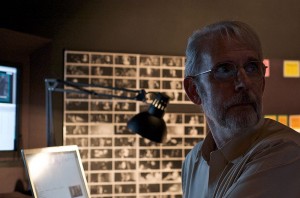
Film sound and editing legend, Walter Murch, recently expounded on the virtues, challenges and future of 3-D technology in the entertainment industry. Murch, who is respected for his Academy Award-winning work on “Apocalypse Now” and Oscar-winning editing and sound mixing work on “The English Patient,” recently wrote a letter to film critic Roger Ebert about the world of 3-D.
Murch’s own history with 3-D technology started back in 1986 when he edited the 3-D version of Michael Jackson’s “Captain Eo,” which was directed by Francis Ford Coppola and shown at Disney theme parks. Many actually claim this film was “4-D” since it incorporated so many in-theater effects (lasers, smoke, etc.) synched to the film’s narrative.
In the letter he wrote to Ebert, Murch explains that the biggest obstacle in producing 3-D films is the “convergence/focus issue.” As a viewer watches a 3-D film, different “planes” are apparent to the viewer, and though the viewer him or herself is not changing their location
Posted on: February 14, 2011Posted by: Kerry Mann -
Meet The Team
Out of the answers below, can you guess why people are hesitant to buy online?
A. Cannot see the product in person.
B. Does the finish look exactly as it does online?
C. Concerns over online security.
D. Do not feel comfortable doing business with people they have not had the opportunity to meet face to face.
E. All of the above.
If you answered “E”, then you share the same concerns of many. It can be quite nerve wracking to make a purchase sight unseen with an unfamiliar company.
As an online furniture company, we face these hurdles every day when speaking with our customers. It is extremely important to us to make sure our customers feel comfortable when making their purchases. That is why we make sure to address each and every one of these reservations.
For starters, did you know that we can send you wood-finish samples of any our TV lift cabinets? Yes, it is absolutely true! To ensure our customers select the right TV lift cabinet
Posted on: February 14, 2011Posted by: Kerry Mann