

RV and camper TV lifts face different demands than home installs vibration, tight clearances, and 12V systems. A complete guide to choosing the right one.
A TV lift built for a house and a TV lift built for an RV are not interchangeable products, even if they look similar on paper. Life on the road introduces a set of stresses that home installations never face, and the right RV TV lift is engineered specifically around them.
Why RV installs are fundamentally different
Constant vibration. Every mile of road puts repeated stress on mounting hardware, guide rails, and electrical connections in a way a stationary home cabinet never experiences. Hardware that would hold indefinitely in a living room can work loose over a season of travel if it isn't rated for vibration resistance.
Tight, precise cabinetry. RV interiors are built to exact, often smaller dimensions than home furniture. There's rarely slack in the design to accommodate a mechanism that's slightly too tall or too deep measurements matter more, with less room for error.
Electrical system differences. Many RVs run on a 12V DC system for most onboard electronics, separate from (or supplementing) a 120V AC shore-power or inverter setup. A lift mechanism needs to match whichever system you're wiring it into, and not all mechanisms are built for 12V compatibility.
Weight and balance considerations. In a moving vehicle, minimizing unnecessary weight matters more than in a house, and TV size in RVs tends to run smaller as a result usually 24"–40" rather than the 55"+ common in living rooms.
What to look for in an RV-specific TV lift
Vibration-rated mounting hardware. Look specifically for mechanisms marketed or rated for mobile/marine/RV use, not just general household lift kits the hardware specification is genuinely different.
Compact, shallow mechanism design. RV cabinetry rarely has extra depth to spare, so a mechanism with a shorter collapsed height gives you more flexibility in where it can be installed.
12V compatibility (or a clear plan for 120V). Confirm which electrical system you're wiring into before purchasing, since retrofitting a mechanism built for the wrong voltage system adds real cost and complexity.
Lightweight TV compatibility. Since most RV TVs are smaller, you generally don't need the highest-weight-capacity mechanisms built for large home TVs this can actually simplify your options and reduce cost.
Secure cable routing. With constant vibration, any loose cable along the lift's path is at real risk of working itself into the mechanism over time. Look for designs with built-in cable channels or clips.
Where RV TV lifts work best
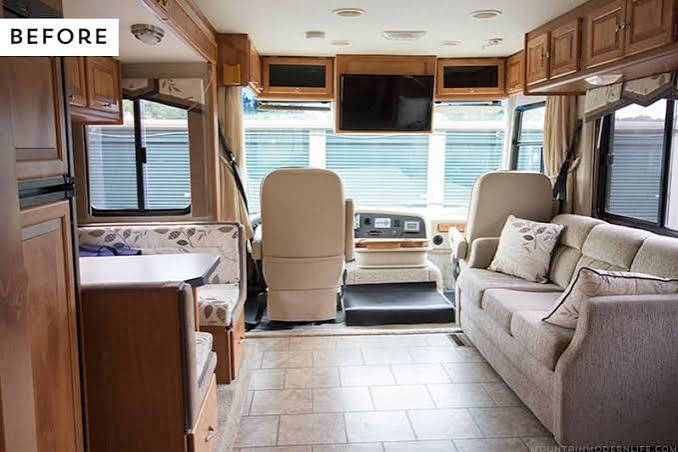
Overhead cabinets. A common and space-efficient placement, especially over a dinette or in a bedroom nook, where the TV can lower flush into the cabinet during driving.
Dedicated entertainment cabinets behind the cab. In larger motorhomes, a purpose-built cabinet gives more room to work with and often larger TV options.
Slide-out wall units. In RVs with slide-out sections, a lift integrated into the slide can maximize usable space when the slide is extended, and tuck away cleanly when it's retracted for travel.
A note on installation timing
Because RV cabinetry is often lighter-built than home furniture, it's worth reinforcing the mounting area before installing the mechanism, not after see our full RV installation guide for the step-by-step process.