
furniture for rvs
-
12V vs 120V TV Lifts for RVs: Which Do You Need?

RV electrical systems typically run 12V, 120V, or both — and that determines which TV lift mechanism actually works for your rig. Here's how to figure out which you need.
One of the first practical decisions in an RV TV lift install is matching the mechanism to your rig's actual electrical system, and it's a decision that needs to happen before you buy, not after.
Understanding your RV's electrical setup
Most RVs run a 12V DC system fed by the house battery (and charged via solar, shore power through a converter, or engine alternator while driving) for lights, fans, and basic electronics, alongside a separate 120V AC system that's only live when connected to shore power or running a generator/inverter. Which system is actually available to you at the TV's location, and under what conditions (driving, boondocking, plugged in at a campground), determines which lift mechanism makes sense.
When a 12V mechanism is the right choice
If you want the TV lift to function reliably while boondocking
Posted on: August 06, 2026Posted by: Jenn Mann -
Best TV Lift Solutions for RVs and Campers
RV and camper TV lifts face different demands than home installs vibration, tight clearances, and 12V systems. A complete guide to choosing the right one.
A TV lift built for a house and a TV lift built for an RV are not interchangeable products, even if they look similar on paper. Life on the road introduces a set of stresses that home installations never face, and the right RV TV lift is engineered specifically around them.
Why RV installs are fundamentally different
Constant vibration. Every mile of road puts repeated stress on mounting hardware, guide rails, and electrical connections in a way a stationary home cabinet never experiences. Hardware that would hold indefinitely in a living room can work loose over a season of travel if it isn't rated for vibration resistance.
Tight, precise cabinetry. RV interiors are built to exact, often smaller dimensions than home furniture. There's rarely slack in the design to accommodate a mechanism that's slightly too tall or too deep measurements
Posted on: July 28, 2026Posted by: Jenn Mann -
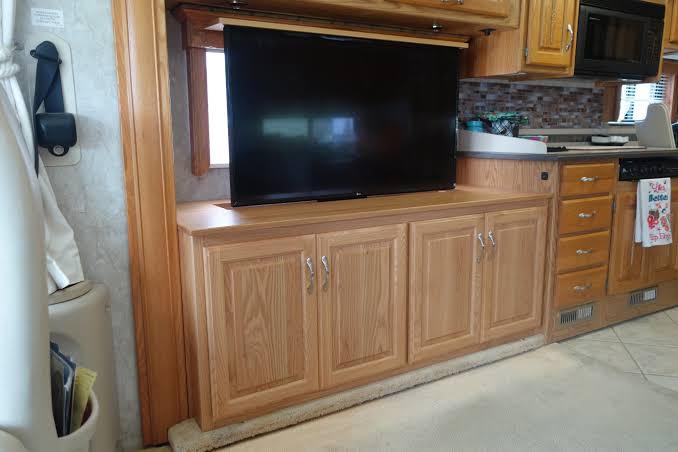
RV TV Lifts Provide Function on the Go
Are you a road warrior who enjoys the comforts of home? One of the biggest sacrifices of people who travel the world is the lack of space, which limits the luxury you can bring with you on your adventures. Recreational vehicles have exploded in popularity over the last several years, especially the type that is essentially a rolling luxury home. Many of these RVs have amenities such as granite countertops, hardwood floors, and all sorts of other perks to replicate the experience of being at home on the go. But did you know that many of the benefits of having a TV lift cabinet in your den, living room, or bedroom can be multiplied when in a particularly cramped space, such as an RV.
We talk a lot about saving space and adding convenience by adding a TV lift, and with the constraints of space, an RV is a perfect place to take advantage of compact and convenient nature of a TV lift (not to mention the luxury). Driving around, it is unsafe to have a TV loose and sitting on top of an entertainmentPosted on: January 02, 2014Posted by: Kerry Mann