

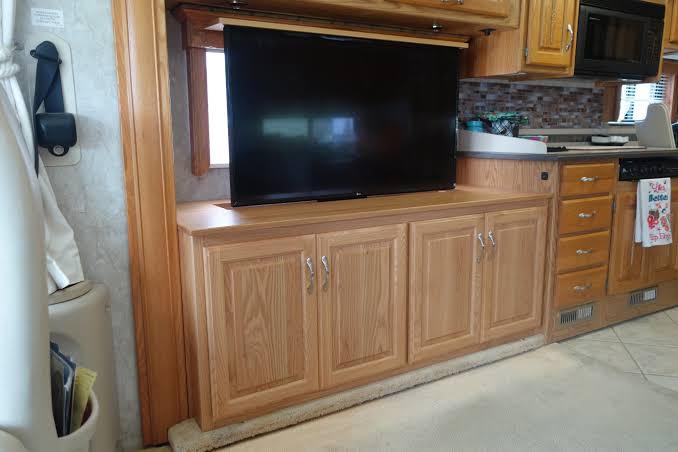
RV electrical systems typically run 12V, 120V, or both — and that determines which TV lift mechanism actually works for your rig. Here's how to figure out which you need.
One of the first practical decisions in an RV TV lift install is matching the mechanism to your rig's actual electrical system, and it's a decision that needs to happen before you buy, not after.
Understanding your RV's electrical setup
Most RVs run a 12V DC system fed by the house battery (and charged via solar, shore power through a converter, or engine alternator while driving) for lights, fans, and basic electronics, alongside a separate 120V AC system that's only live when connected to shore power or running a generator/inverter. Which system is actually available to you at the TV's location, and under what conditions (driving, boondocking, plugged in at a campground), determines which lift mechanism makes sense.
When a 12V mechanism is the right choice
If you want the TV lift to function reliably while boondocking or driving — situations where you're running off battery power rather than shore power or a generator — a 12V-compatible mechanism is the more dependable choice, since it draws directly from the same battery system powering the rest of your rig's basic electronics.
When a 120V mechanism makes sense instead
If your TV setup is only realistically used when you're plugged into shore power or running a generator (a common pattern for larger motorhomes primarily used at campgrounds with hookups), a standard 120V mechanism, run through your RV's inverter or shore connection, works fine and often gives you more mechanism options to choose from, since 120V lift mechanisms are the more common product category overall.
The hybrid consideration
Some RV setups run an inverter that converts battery power to 120V for exactly this kind of use, effectively letting a 120V mechanism run off the 12V house battery system indirectly. This works, but adds an efficiency loss and depends on your inverter's capacity — worth confirming your inverter can handle the mechanism's power draw, especially at motor startup when draw is often highest.
A practical decision framework
Ask yourself: will I realistically use this TV lift while boondocking or driving, off battery power alone? If yes, prioritize a 12V-compatible mechanism. If your realistic use case is almost always at a campground with shore power available, a 120V mechanism, potentially through your existing inverter setup, is the simpler and more commonly available option.
Don't guess — confirm before you buy
Because retrofitting a mechanism to a different voltage system after installation is a genuine hassle, confirm your RV's actual available electrical system at the intended TV location, and match your mechanism purchase to that reality before ordering, not after your cabinetry is already built around it.
See our RV-specific TV lift mechanisms for both electrical systems