
bedroom TV lift cabinet
-
he Best End of Bed TV Lift Cabinet for a Cozy Winter Bedroom

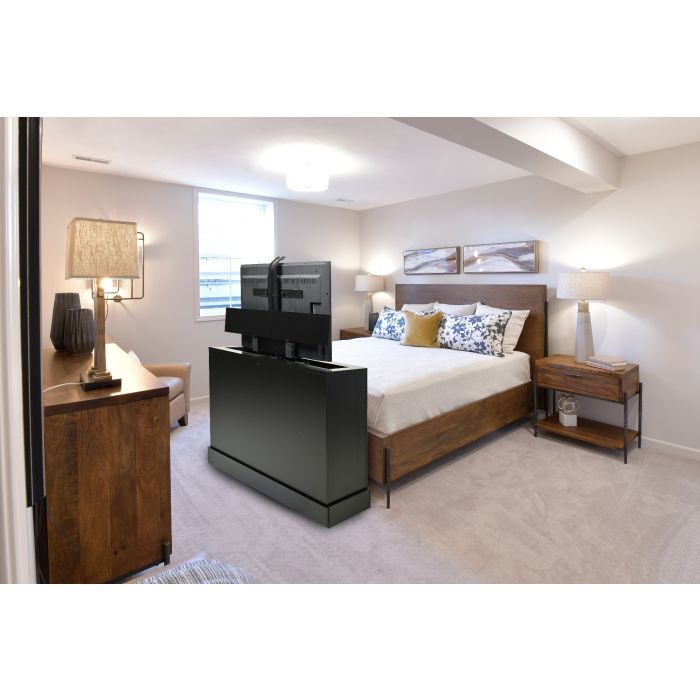
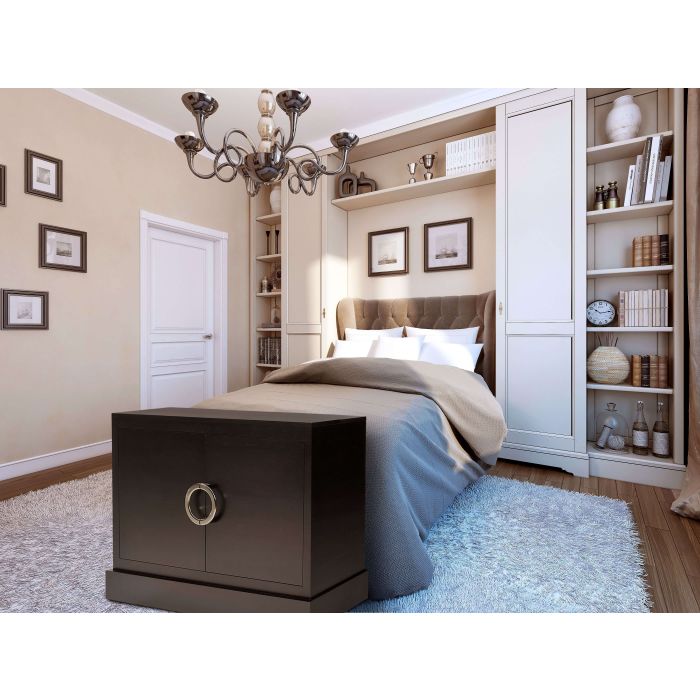
The best end of bed TV lift cabinet does two jobs well. It gives you a comfortable view of the TV from bed on long winter nights, and it makes the TV completely disappear when you are ready to sleep. When the screen is down, it looks like a handsome bench height chest at the foot of the bed.
In winter, the bedroom becomes a retreat. Early sunsets, snow days, and holiday guests in the house all mean more time spent curled up upstairs. A lift cabinet lets you enjoy that time without a TV staring at you from the wall all night.
What makes the best end of bed TV lift cabinet
1. The right width for your bed. A queen bed and a king bed call for different cabinet widths. The cabinet should feel proportional to the footboard and leave a clear walking path on both sides.
2. The right TV size. From the foot of the bed, most people sit 6 to 9 feet from the screen. A 43 inch or 55 inch TV is the sweet spot for most bedrooms. Our Petite line fits most 43 inch TVs. Clubside, Marina, and Azura fit most
Categories: foot of the bed TV lift cabinet , add space to your bedroom , End of the bed TV Lift Cabinet , End of Bed TV Lifts , bedroom TV lift cabinetPosted on: October 27, 2026Posted by: Jenn Mann -
Hidden TV Lift Under a 7-Foot Concrete Countertop (Modustrial Maker Build)
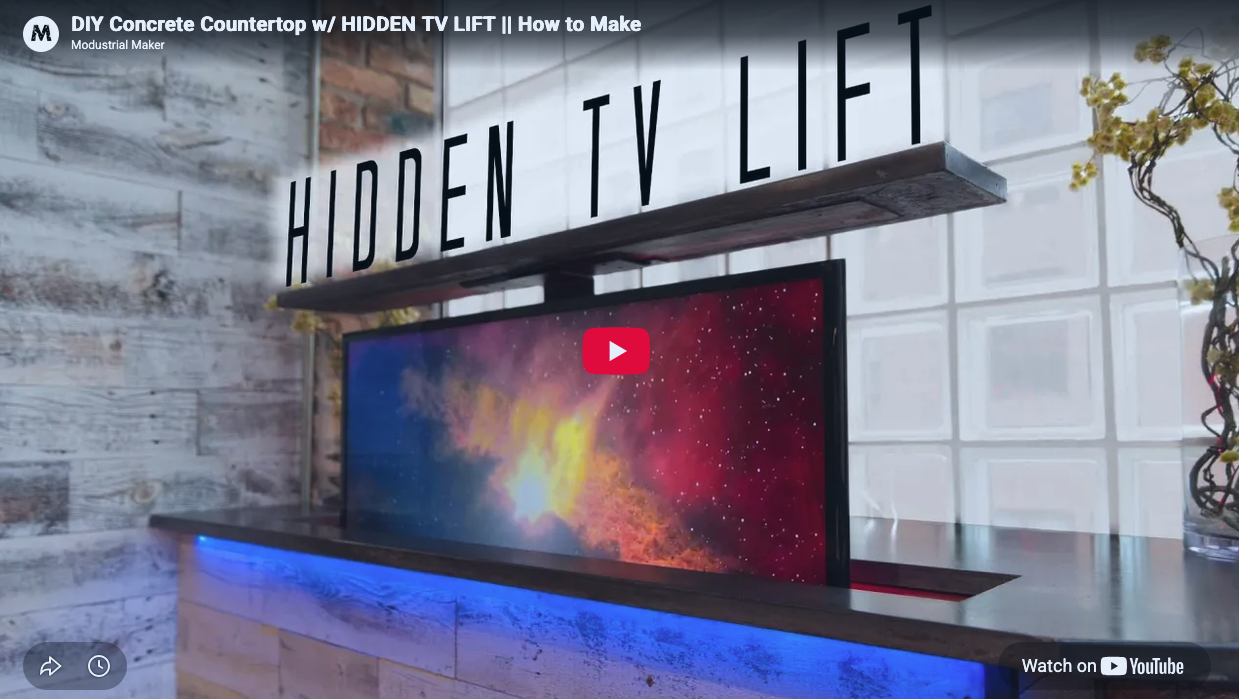
If you have ever looked at a TV sitting on a dresser and thought it just did not belong there, this build is going to speak to you. Modustrial Maker had the same problem in his bedroom. The TV on his dresser sat too low to watch comfortably from bed, and he called it an eyesore. His fix was a faux wall that hides a motorized TV lift from TVLiftCabinet.com under a 7-foot concrete countertop.
What makes this video stand out is the lid. Most lift cabinets use a wood lid, but he poured the lid in concrete to match the countertop. To give the lid something to screw into, he embedded pieces of half-inch plywood right into the concrete, then attached that concrete lid to the top of the lift. He admits at the end that he was not sure a lift could handle a concrete lid, and he says it works really well.
The concrete itself is glass fiber reinforced concrete, or GFRC, which he chose because it let him make the countertop thinner and lighter. He tinted it dark with black pigment, sprayed a face coat,
Categories: tv lift cabinets. TV Lifts , DIY TV lift , add space to your bedroom , Hidden TV , bedroom TV lift cabinetPosted on: October 01, 2026Posted by: Jenn Mann -
TV Lift Cabinets for the Bedroom: Wake Up to a Room That Doesn't Scream "Media Room"
A bedroom with a TV mounted on the wall looks like a media room with a bed in it. A bedroom with a TV lift cabinet looks like a bedroom, until you want it to be something else.
The Problem with a Wall-Mounted Bedroom TV
Most design guidance says to treat the bedroom as a retreat, not an entertainment hub. A blank screen staring back at you from across the room works against that, even when it's off. It changes the visual weight of the space and often ends up dictating furniture placement around it.
How a Lift Cabinet Changes the Room
A TV lift cabinet at the foot of the bed, along a side wall, or built into a dresser keeps the television completely out of sight until you raise it. The room defaults to calm: soft furniture, a dresser, maybe a bench, nothing competing for attention.
Common placements include:
- Foot-of-bed cabinets, which double as a bench or storage dresser
- Dresser-integrated lifts, where the TV rises from a normal-looking dresser top
- Corner cabinets, useful in bedrooms
Posted on: September 01, 2026Posted by: Jenn Mann -
What Styles of TV Lift Cabinets Are Available?
TV lift cabinets are available in a wide range of furniture styles including traditional, transitional, contemporary, modern, coastal, rustic, and custom. They come in formats ranging from tall armoires and entertainment centers to low bedroom consoles, bed-foot benches, and sideboards. The variety has expanded significantly in recent years, making it possible to find a TV lift cabinet that integrates naturally into almost any interior design aesthetic.
One of the most common misconceptions about TV lift cabinets is that they're all large, dark-wood armoires from the early 2000s. That world has changed. Today's TV lift cabinet market offers a design range broad enough to suit virtually any interior — from a beachhouse great room to a minimalist urban loft.
Traditional and Transitional Styles
Traditional TV lift cabinets are built in the style of fine English or American furniture — raised-panel doors, crown molding, carved details, cherry or mahogany finishes. Transitional styles bridge
Categories: TV lift cabinet designs , contemporary TV lift cabinet , rustic TV lift cabinet , living room TV lift cabinet , bedroom TV lift cabinetPosted on: July 01, 2026Posted by: Jenn Mann