

living room TV lift cabinet
-
A Living Room Transformation: Before and After
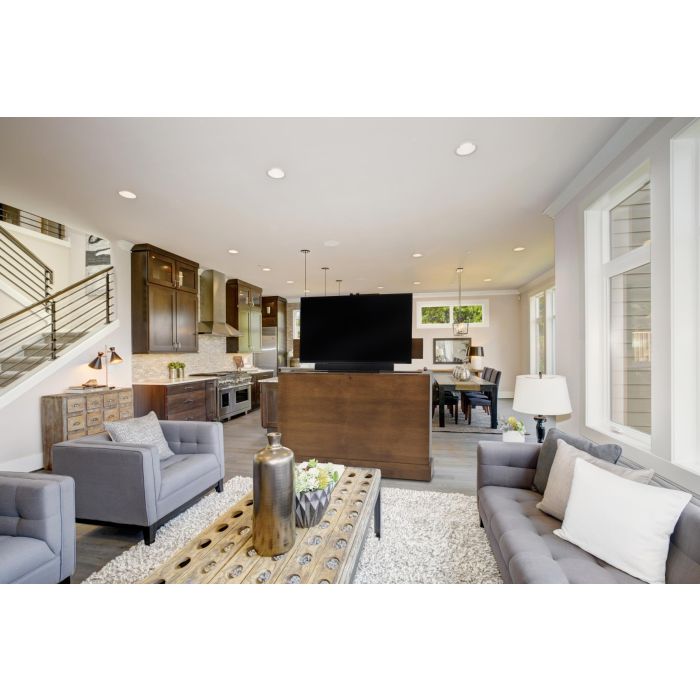
Picture the "before": a bulky entertainment center anchoring one whole wall of the room, cords snaking out from behind it in every direction, a cable box and a gaming console and a soundbar all stacked in full view. The TV itself is impossible to ignore no matter where you're sitting, and no amount of careful furniture arrangement around it changes that basic fact.
It's a setup that works, in the sense that everything's plugged in and functional but it's rarely the room people picture when they imagine their dream living space. It looks like a room built around a television, because, functionally, it is one.
Now picture the "after." A single, clean cabinet sits in that same spot. No visible cords snaking anywhere. No mismatched media furniture stacked around the perimeter trying to disguise itself. No oversized black rectangle pulling focus away from the rest of the room the second you walk in. The television is completely hidden until someone actually wants to use it.
The difference isn't
Categories: Your Living Room/Family Room , living room , Living Spaces , Clutter Free Living , Luxury Living Spaces , living room TV lift cabinet , TV lift living roomPosted on: August 25, 2026Posted by: Jenn Mann -
What Styles of TV Lift Cabinets Are Available?
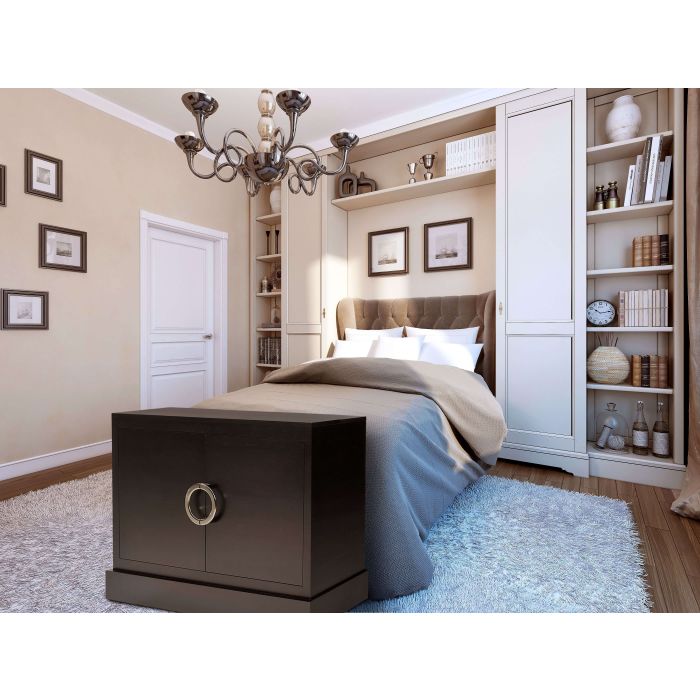
TV lift cabinets are available in a wide range of furniture styles including traditional, transitional, contemporary, modern, coastal, rustic, and custom. They come in formats ranging from tall armoires and entertainment centers to low bedroom consoles, bed-foot benches, and sideboards. The variety has expanded significantly in recent years, making it possible to find a TV lift cabinet that integrates naturally into almost any interior design aesthetic.
One of the most common misconceptions about TV lift cabinets is that they're all large, dark-wood armoires from the early 2000s. That world has changed. Today's TV lift cabinet market offers a design range broad enough to suit virtually any interior — from a beachhouse great room to a minimalist urban loft.
Traditional and Transitional Styles
Traditional TV lift cabinets are built in the style of fine English or American furniture — raised-panel doors, crown molding, carved details, cherry or mahogany finishes. Transitional styles bridge
Categories: TV lift cabinet designs , contemporary TV lift cabinet , rustic TV lift cabinet , TV lift cabinet designs , living room TV lift cabinet , bedroom TV lift cabinetPosted on: July 01, 2026Posted by: Jenn Mann