
Clutter Free Living
-
Protecting Your TV from Kids, Pets, and Clutter with a Lift Cabinet

Family rooms are active places. Toys migrate, tails wag, homework spreads, and somehow everyone still wants a screen for cartoons, workouts, and Friday movies. A wall-mounted TV survives some of that chaos, but it stays exposed. A TV lift cabinet adds a simple protection habit: when the show ends, the television lowers into furniture and out of the main traffic lane.
Kids benefit first. Curious hands reach for bright edges, dangling cords, and the mysterious buttons on a bezel. A lowered cabinet reduces those invitations. It also helps during playdates when the room flips from media mode to fort-building mode in minutes. You are not anti-television. You are choosing when the screen is available instead of leaving it as a permanent magnet in the middle of the day.
Pets create a different set of risks. Climbing cats, leash flybys, and enthusiastic greetings near a low media stand can nudge a freestanding TV. Wall mounts remove some tip risk but leave screens open to scratches and nose prints
Posted on: September 29, 2026Posted by: Jenn Mann -
A Living Room Transformation: Before and After
Picture the "before": a bulky entertainment center anchoring one whole wall of the room, cords snaking out from behind it in every direction, a cable box and a gaming console and a soundbar all stacked in full view. The TV itself is impossible to ignore no matter where you're sitting, and no amount of careful furniture arrangement around it changes that basic fact.
It's a setup that works, in the sense that everything's plugged in and functional but it's rarely the room people picture when they imagine their dream living space. It looks like a room built around a television, because, functionally, it is one.
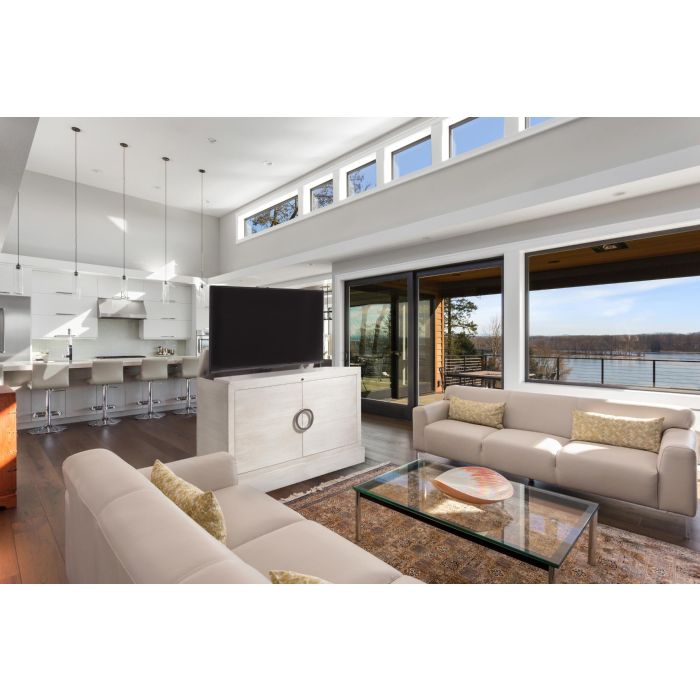
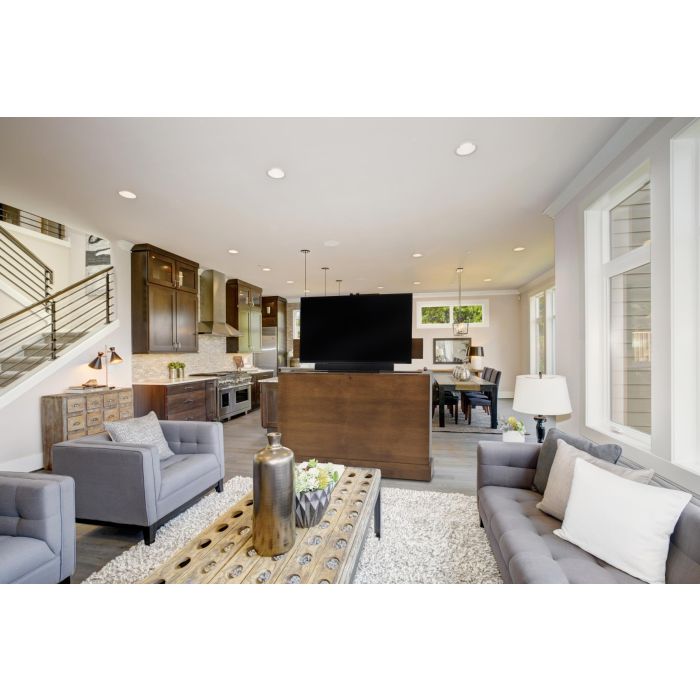
Now picture the "after." A single, clean cabinet sits in that same spot. No visible cords snaking anywhere. No mismatched media furniture stacked around the perimeter trying to disguise itself. No oversized black rectangle pulling focus away from the rest of the room the second you walk in. The television is completely hidden until someone actually wants to use it.
The difference isn't
Categories: Your Living Room/Family Room , living room , Living Spaces , Clutter Free Living , Luxury Living Spaces , living room TV lift cabinet , TV lift living roomPosted on: August 25, 2026Posted by: Jenn Mann