
Made by Us, For Your Home | $200 Off Cabinets & $50 Off Lifts

Blog
-
What Is a TV Lift Cabinet and How Does It Work?
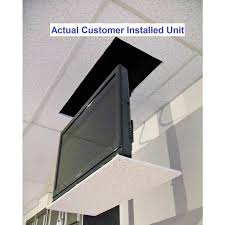
If you've ever wished your living room could look like a living room — and not a home theater showroom — a TV lift cabinet might be exactly what you've been searching for. These ingenious pieces of furniture solve one of modern interior design's most persistent problems: the flat-screen TV dominates every wall and every glance, whether it's on or off.
The Basic Mechanism
At the heart of every TV lift cabinet is a motorized lift platform — typically a scissor-lift or column-lift design — that travels vertically inside a cabinet housing. The TV sits on a mounting platform attached to this lift. When activated, a low-voltage DC motor drives the lift upward through the cabinet top, raising the TV to eye level. When deactivated, the lift reverses and the TV descends back into the cabinet, where doors close (either automatically or manually, depending on the model) to conceal it entirely.
The lift mechanism itself is similar in concept to industrial lift technology, scaled and refined for residential
Posted on: June 13, 2026Posted by: Jenn Mann -
What Should I Look for When Buying a TV Lift Cabinet?

Buying a TV lift cabinet is a bigger decision than choosing a standard TV stand. You’re not just buying furniture—you’re buying a motorized system, a design feature, and a long-term home upgrade all in one.
Because of that, the difference between a great purchase and a frustrating one usually comes down to knowing what to look for before you buy.
Here’s a complete buyer’s guide covering the most important factors.
1. Motor Quality (The Most Important Factor)
The lift motor is the heart of the entire system. Everything depends on it working smoothly and reliably.
Look for:
- Quiet operation (low vibration)
- Soft-start and soft-stop movement
- Rated lift cycle lifespan (thousands of cycles)
- Smooth, consistent motion without jerking
Higher-quality motors are engineered for daily use and tend to last significantly longer than budget systems. If the motor is weak or noisy, the entire cabinet will feel low quality regardless of how nice it looks.
2. TV Weight Capacity and Size Limits
Not all lift
Categories: tv lift cabinet buying guide , what to look for tv lift cabinet , is a tv lift cabinet worth it , home upgrade decisions , tv size compatibility , tv lift cabinet buying guidePosted on: June 12, 2026Posted by: Jenn Mann -
TV Lift Cabinet for Small Spaces: What Are Your Options?
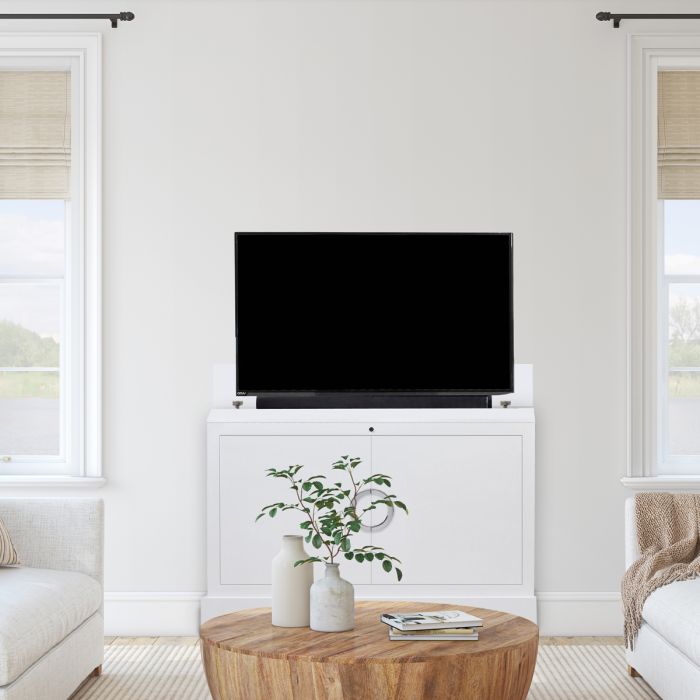
Living in a small space doesn’t mean giving up on a clean, functional entertainment setup. In fact, TV lift cabinets are often a better fit for apartments, condos, and compact bedrooms than traditional media furniture.
The key is choosing the right size, layout, and configuration for your space.
Why TV Lift Cabinets Work Well in Small Spaces
In smaller rooms, every piece of furniture needs to serve more than one purpose. A TV lift cabinet helps solve a common problem: limited wall and floor space combined with visual clutter from electronics.
Instead of mounting a TV or dedicating an entire wall to a media center, a lift cabinet:
- Keeps the TV hidden when not in use
- Reduces visual clutter
- Combines storage and entertainment in one piece
- Eliminates the need for wall mounting
This makes it especially popular in apartments and multi-use rooms.
Best TV Lift Cabinet Styles for Small Spaces
1. Compact Foot-of-Bed Cabinets
Ideal for bedrooms where wall space is limited.
These cabinets:
- Sit at the
Categories: smallest TV Lift cabinet , small spaces , small space TV , Small Space Decorating , small spacesPosted on: June 10, 2026Posted by: Jenn Mann -
Do TV Lift Cabinets Work with Alexa, Google Home, or Apple HomeKit?
As smart homes become more common, one question keeps coming up from buyers considering hidden TV solutions:
Can TV lift cabinets work with Alexa, Google Home, or Apple HomeKit?
The short answer: Yes—many TV lift cabinets can be integrated with smart home systems, but the level of compatibility depends on the lift motor and control setup.
Here’s how it actually works in practice.
How Smart Integration Works with TV Lift Cabinets
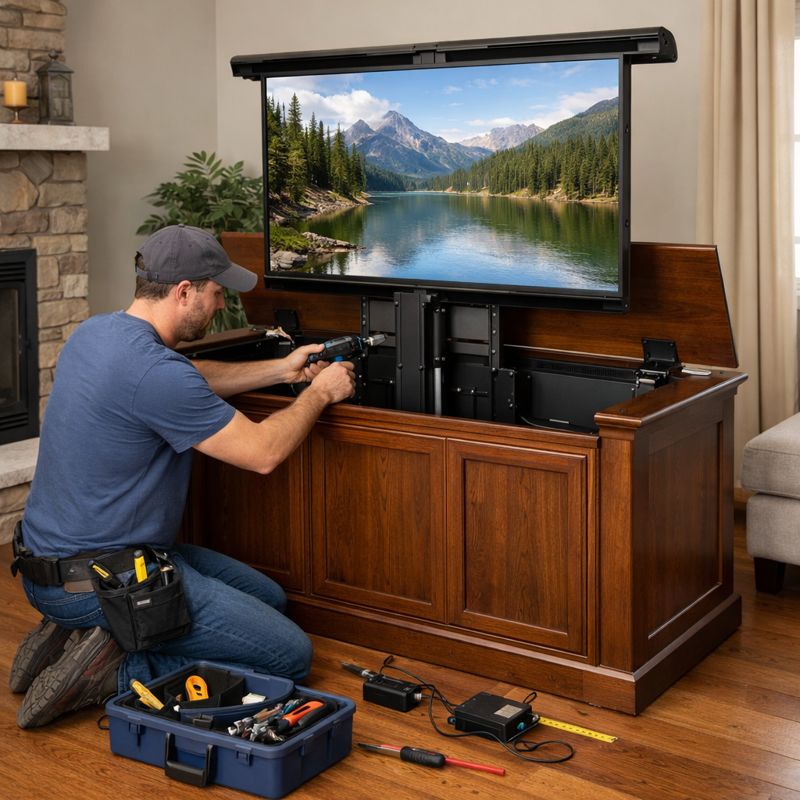
Most motorized TV lift cabinets use a low-voltage control system with a remote, wired switch, or RF receiver. To connect them to a smart home system, you typically need a smart relay or smart plug module that can trigger the “up” and “down” commands.
Once connected, your TV lift can be controlled through:
- Alexa voice commands
- Google Home routines
- Apple HomeKit (via Homebridge or compatible hub setups)
Alexa & Google Home Compatibility
Amazon Alexa and Google Home are the most common integrations for TV lift cabinets.
With the right smart relay or hub, you can create
Categories: Alexa , Apple HomeKit , mart home systems , low-voltage control system , Home CompatibilityPosted on: June 09, 2026Posted by: Jenn Mann -
How Long Do TV Lift Cabinets Last?

If you’re close to buying a TV lift cabinet, one of the final questions usually comes down to durability:
How long will it actually last?
A well-built TV lift cabinet is designed to be a long-term furniture investment, not a temporary entertainment solution. But lifespan depends heavily on three things: motor quality, cabinet construction, and maintenance.
Typical Lifespan of a TV Lift Cabinet
A high-quality TV lift cabinet can last 10–20 years or more with proper care.
The most important factor is the lift mechanism itself. Furniture-grade cabinetry often outlasts the mechanical components, which are the only parts that experience real wear over time.
Motor Lifespan: The Real Key Factor
The motorized lift system is the heart of the cabinet.
Most modern TV lift motors are rated for thousands of lift cycles, typically ranging from:
- 5,000 to 20,000 cycles for consumer-grade systems
- 20,000+ cycles for commercial-grade or premium systems
To put that in perspective:
- Using the lift 2–3 times
Categories: tv lift cabinet lifespan , lift mechanism durability , engineered furniture systems , furniture maintenance , is it worth it , tv lift cabinet durabilityPosted on: June 09, 2026Posted by: Jenn Mann -
What Size TV Fits in a TV Lift Cabinet?

One of the most important questions to answer before purchasing a TV lift cabinet is: What size TV will actually fit?
The answer depends on the cabinet's internal dimensions, lift mechanism, and the physical size of your television—not just its screen size.
TV Size vs. TV Dimensions
Many buyers assume that a "55-inch TV" is exactly 55 inches wide. In reality, TV sizes refer to the diagonal measurement of the screen.
Two TVs with the same screen size can have different overall dimensions depending on:
- Bezel thickness
- Frame design
- Manufacturer
- Model year
That's why it's always important to check the TV's actual width, height, and depth before ordering a lift cabinet.
Common TV Lift Cabinet Size Ranges
Most TV lift cabinets are designed to accommodate televisions within specific size ranges.
Small Cabinets
- Typically fit 32"–43" TVs
- Ideal for bedrooms, apartments, and smaller spaces
Medium Cabinets
- Typically fit 50"–65" TVs
- Most popular option for living rooms and family rooms
Large Cabinets
Categories: Your Living Room/Family Room , living room , add space to your bedroom , custom size tv lift , small spaces , small space TV , Small Space DecoratingPosted on: June 07, 2026Posted by: Jenn Mann -
How Quiet Are Motorized TV Lift Cabinets?
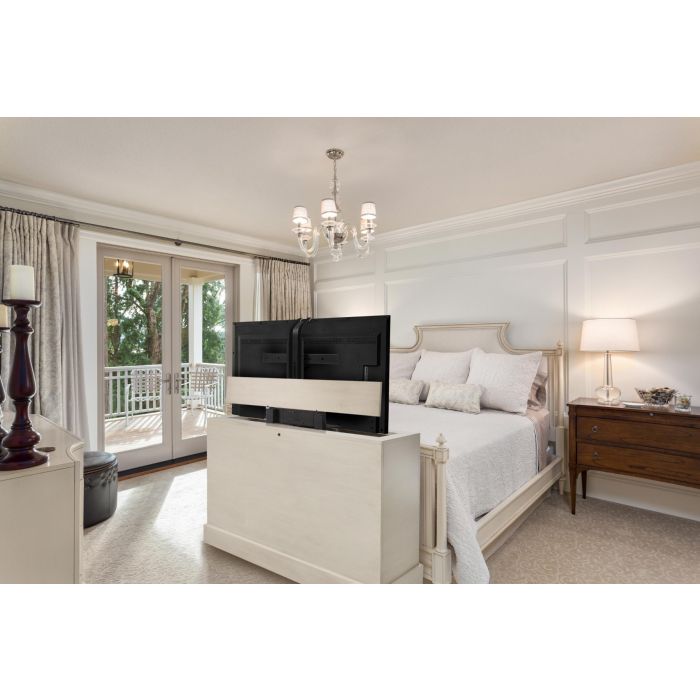
One of the most common questions buyers ask before purchasing a TV lift cabinet is: How much noise does the lift mechanism make?
The good news is that most modern TV lift cabinets are designed to operate quietly, especially higher-quality models built for residential use.
How Loud Is a TV Lift Cabinet?
A quality motorized TV lift typically produces about 40–50 decibels (dB) during operation.
For comparison:
- Whisper: ~30 dB
- Quiet library: ~40 dB
- Refrigerator hum: ~40–45 dB
- Normal conversation: ~60 dB
This means most TV lift cabinets are closer to the sound of a quiet appliance than a household power tool.
In practical terms, you'll hear the lift moving, but it shouldn't be disruptive or distracting.
Why Some TV Lift Cabinets Are Quieter Than Others
Not all lift systems are built the same. Noise levels often depend on:
- Motor quality
- Lift mechanism design
- Cabinet construction
- TV weight
- Installation quality
Premium lift systems typically feature smoother operation, better vibration control,
Posted on: June 03, 2026Posted by: Jenn Mann -
How to Hide Your TV in the Living Room

A television is often the largest object in a living room—but that doesn't mean it has to be the center of attention.
Many homeowners want a clean, stylish space without a large black screen dominating the room. The good news is there are several ways to hide your TV while still keeping it easily accessible when it's time to watch.
1. Use a TV Lift Cabinet
One of the most effective solutions is a TV lift cabinet.
With a motorized lift mechanism, the television stays hidden inside a furniture cabinet until you press a button. When you're finished watching, it retracts out of sight.
Benefits include:
- Completely hides the TV
- No visible cables
- Works in front of windows or fireplaces
- Adds functional furniture to the room
- Creates a cleaner, more luxurious look
For homeowners who want both convenience and aesthetics, TV lift cabinets are often the most elegant option.
2. Install Sliding or Barn Doors
Some entertainment centers feature sliding panels or barn-style doors that cover the television
Categories: TV lift cabinet , pop lift cabinets. tv lifts , tv lift cabinets. TV Lifts , Hideaway TV Lift cabinet , tv lift cabinet with storagePosted on: June 01, 2026Posted by: Jenn Mann -
Best TV Lift Cabinet for a Bedroom
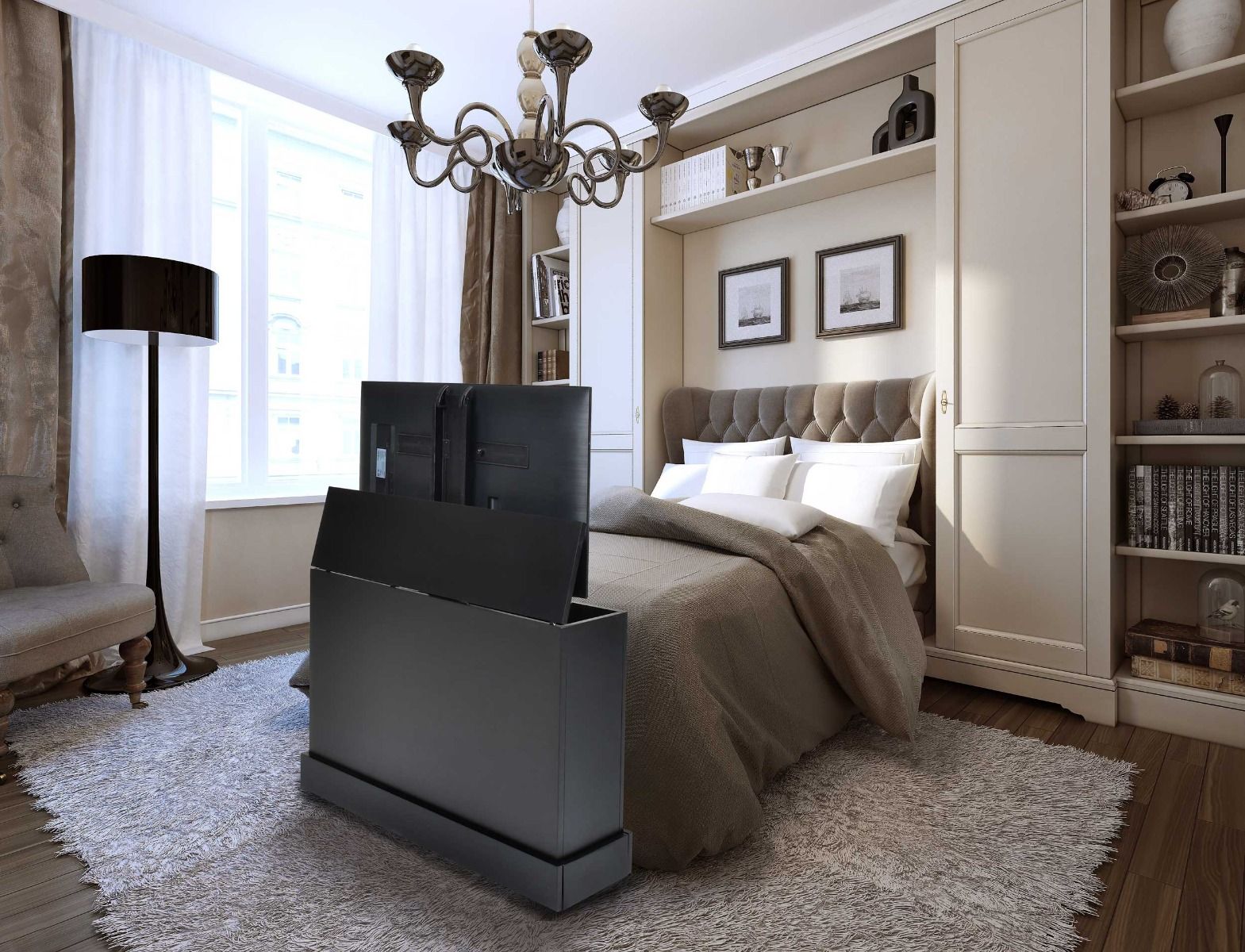
A bedroom TV should be convenient when you want it—and invisible when you don't. That's why many homeowners choose a TV lift cabinet instead of mounting a television on the wall.
But what makes the best TV lift cabinet for a bedroom?
The Ideal Bedroom Setup: Foot-of-Bed Placement
The most popular bedroom configuration places the TV lift cabinet at the foot of the bed. With the press of a button, the television rises into view and retracts when you're finished watching.
This setup offers several advantages:
- Comfortable viewing angle from bed
- No need to mount a TV on the wall
- Cleaner, less cluttered bedroom design
- Hidden technology when not in use
For many homeowners, it creates a more relaxing and luxurious atmosphere.
Quiet Operation Matters
In a living room, a noisy lift mechanism may not be a major concern. In a bedroom, it's one of the most important features to consider.
Look for a TV lift cabinet with:
- Smooth motorized operation
- Minimal vibration
- Quiet lift mechanisms
- Quality engineering
Posted on: May 28, 2026Posted by: Jenn Mann -
TV Lift Cabinet vs Wall Mount: Which Is Better?
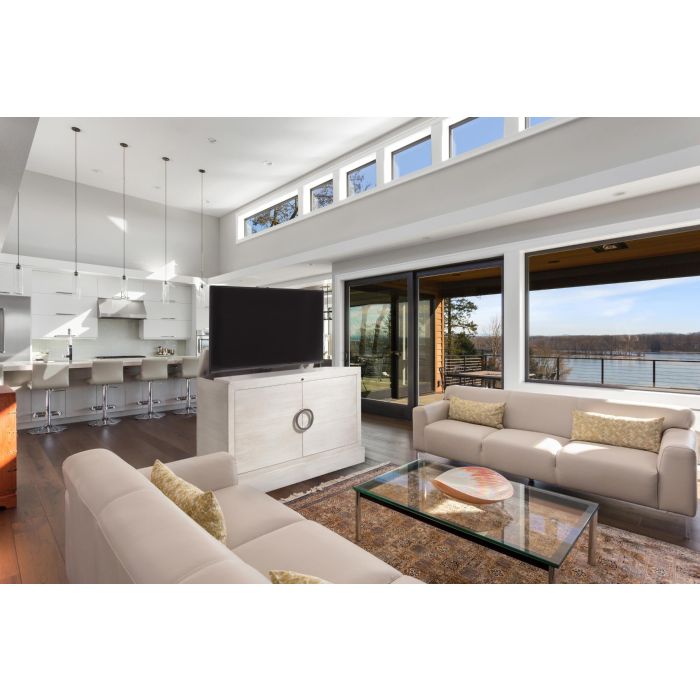
When planning a room around a television, one of the biggest decisions is whether to use a TV lift cabinet or a wall mount. Both options save space and create a clean look, but they serve different purposes.
So which is better? The answer depends on your priorities: aesthetics, flexibility, installation, and how you use the room.
Aesthetics: TV Lift Cabinets Win
A wall-mounted TV keeps the screen visible at all times. While this creates a modern look, many homeowners don't love having a large black rectangle as the room's focal point.
A TV lift cabinet solves that problem by hiding the television completely when it's not in use. The result is a cleaner, more furniture-focused design that works especially well in living rooms, bedrooms, and luxury spaces.
Best choice for aesthetics: TV Lift Cabinet
Flexibility: TV Lift Cabinets Offer More Options
Wall mounts are fixed to a specific location. Once installed, moving the TV usually requires patching walls and rerouting cables.
TV lift cabinets
Categories: contemporary tv lift cabinets , tv lift cabinets. TV Lifts , TV lift mechanism , latest tv lift cabinets , modern tv lift cabinet , Wall MountPosted on: May 26, 2026Posted by: Jenn Mann