


Blog

  1. Rethinking the Bedroom TV with an End-of-Bed Lift Cabinet

    There's a reason most well-designed hotel rooms skip the giant wall-mounted TV in favor of something more discreet. A screen staring back at you from across the room, all day, every day, just doesn't feel restful and a bedroom is supposed to be the one room in the house built entirely around rest.

    An end-of-bed lift cabinet solves that tension in a genuinely satisfying way. During the day, it's simply a dresser or media bench positioned at the foot of the bed a place for folded linens, extra clothing storage, or whatever else the room needs. Visually, it disappears into the rest of the bedroom's design, no different from any other piece of quality furniture.

    At night, everything changes with one press of the remote. The lift mechanism inside raises the TV smoothly into view, positioned at the perfect height and angle for watching from bed. A few episodes of a favorite show, a movie before lights out, the news in the morning while you're still under the covers all of it becomes possible

    Posted on: August 10, 2026
    Posted by: Jenn Mann
  2. The Cabinet That Makes You Ask "Wait, Where's the TV?

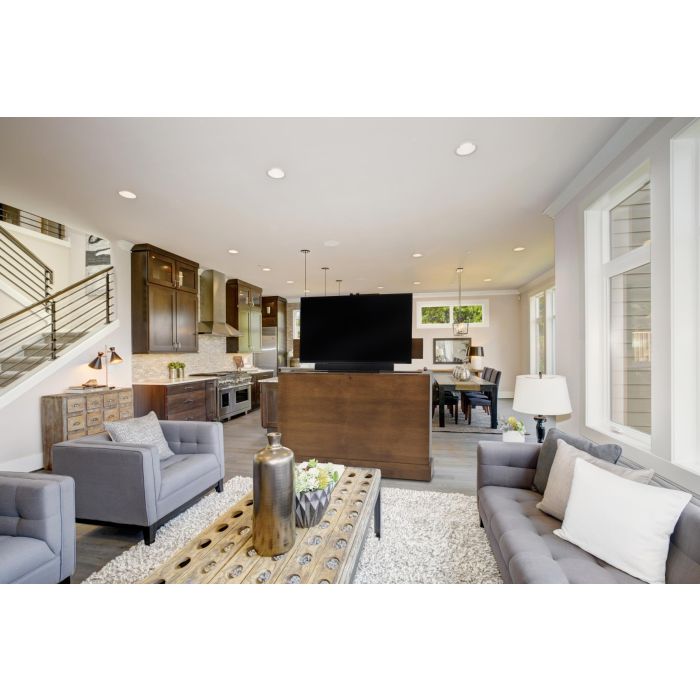
    Walk into this living room and the first thing you notice isn't a television it's the furniture. A clean-lined cabinet, warm wood tones, nothing mounted on the wall competing for attention. The room feels finished, intentional, like it was designed around the furniture and the light rather than around a giant black rectangle.

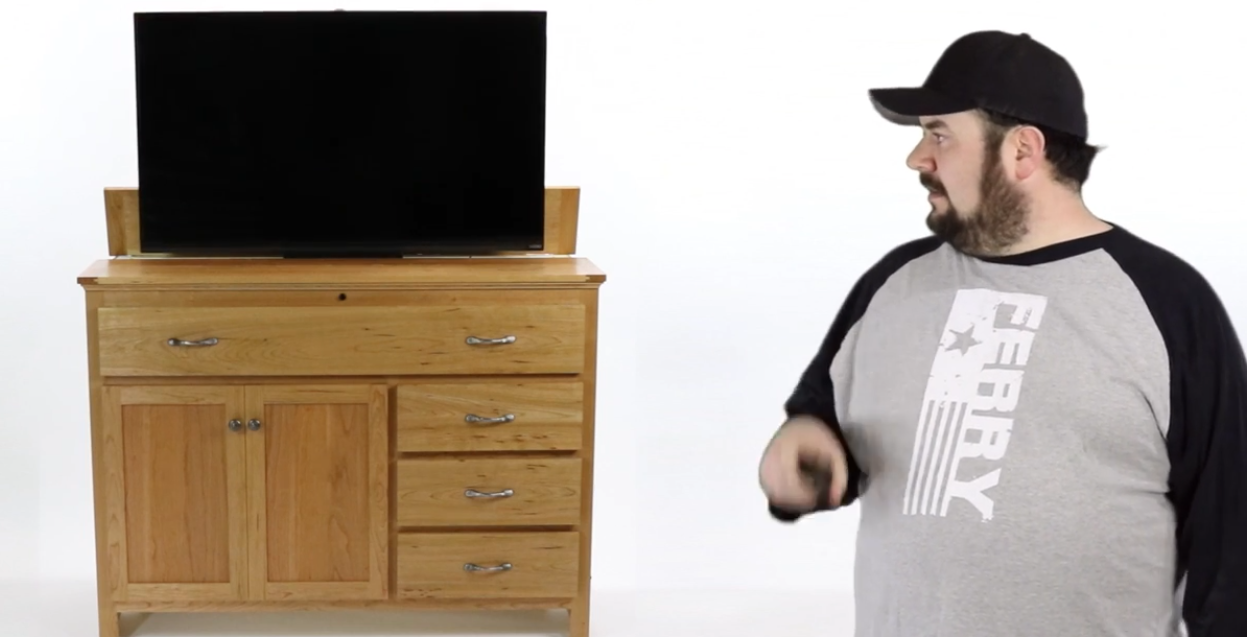
    Then someone picks up the remote and presses a single button. Quietly, smoothly, a 55-inch flat-screen TV rises up out of the cabinet, almost like the room was hiding a secret the whole time. It's a moment that gets a reaction every single time, even from people who've seen it before.

    That's the entire appeal of a motorized TV lift cabinet in one sentence: you get all the entertainment of a full-size television without any of the visual clutter that usually comes with it. No wall-mounted screen dominating the room from every angle. No tangle of cords running behind furniture that you're constantly trying to hide or reroute. No mismatched media console stacked with

    Posted on: August 09, 2026
    Posted by: Jenn Mann
  3. Meet the Petite Coral Beach

    Not every room needs or can even accommodate a massive statement cabinet. Studio apartments, smaller bedrooms, secondary living spaces, guest rooms: plenty of the spaces people actually want a lift cabinet in simply don't have the square footage for an oversized piece. That's exactly the gap the Petite Coral Beach was built to fill.

    Sized to fit TVs up to 43" diagonal, the Petite is proportioned specifically for smaller rooms without asking you to give up any of the experience found in our larger cabinets. Same motorized lift, same handcrafted wood construction, same satisfying reveal when the TV rises into view just scaled down to a footprint that actually makes sense in a compact space.

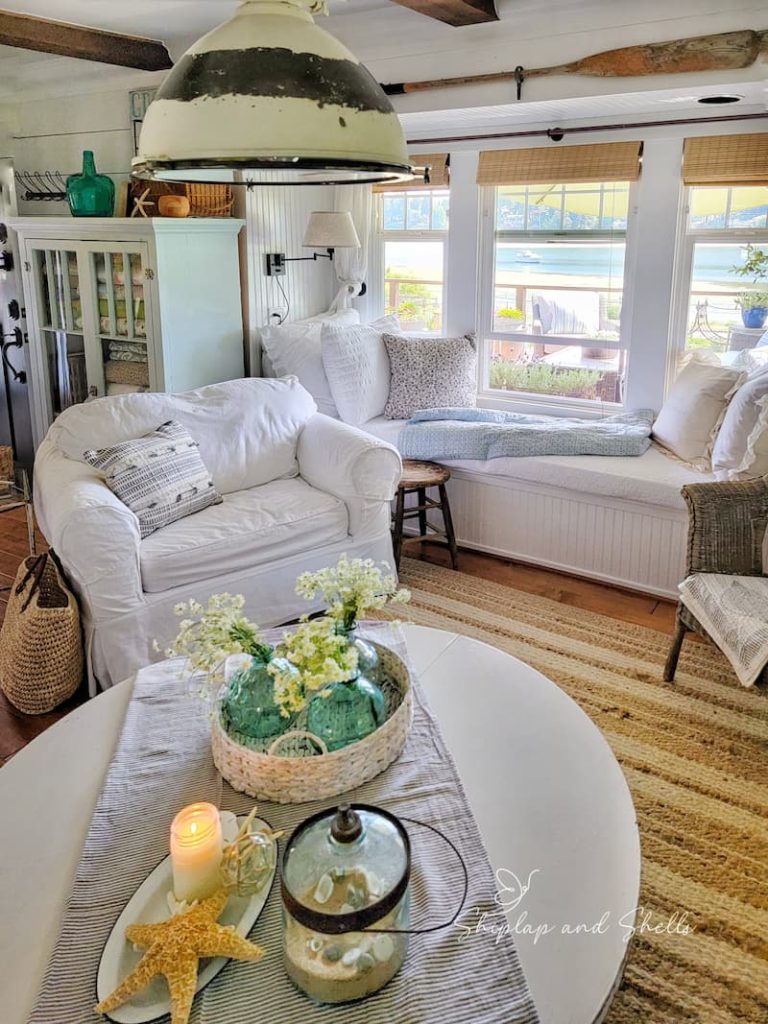
    The Coral Beach finish adds a soft, coastal warmth that works particularly well in bedrooms, guest rooms, or any space leaning toward a lighter, more relaxed aesthetic rather than something heavy or formal. It's a finish that photographs beautifully in natural light, which is exactly the kind of room a

    Posted on: August 08, 2026
    Posted by: Jenn Mann
  4. 12V vs 120V TV Lifts for RVs: Which Do You Need?

    RV electrical systems typically run 12V, 120V, or both — and that determines which TV lift mechanism actually works for your rig. Here's how to figure out which you need.

    One of the first practical decisions in an RV TV lift install is matching the mechanism to your rig's actual electrical system, and it's a decision that needs to happen before you buy, not after.

    Understanding your RV's electrical setup

    Most RVs run a 12V DC system fed by the house battery (and charged via solar, shore power through a converter, or engine alternator while driving) for lights, fans, and basic electronics, alongside a separate 120V AC system that's only live when connected to shore power or running a generator/inverter. Which system is actually available to you at the TV's location, and under what conditions (driving, boondocking, plugged in at a campground), determines which lift mechanism makes sense.

    When a 12V mechanism is the right choice

    If you want the TV lift to function reliably while boondocking

    Posted on: August 06, 2026
    Posted by: Jenn Mann
  5. How to Choose the Right TV Size for an End-of-Bed Lift Cabinet

    End-of-bed viewing distances are shorter than living rooms, which changes the math on what TV size actually makes sense. A full sizing guide.

    Bedroom viewing distances are almost always shorter than living room distances, and that changes the sizing math in a way a lot of buyers don't account for when they default to "bigger is better."

    Measure your actual viewing distance first

    Measure from your typical head position while sitting up in bed (propped against pillows, which is the most common bedroom TV-watching posture) to where the cabinet will sit. Most bedrooms land somewhere in the 6-10 foot range — noticeably shorter than a typical living room's 10-15+ foot distance.

    Applying the sizing formula to bedroom distances

    Using the same general 1.5x-2.5x viewing distance guideline used for any room, an 8-foot (96-inch) bedroom viewing distance suggests a TV in the roughly 40"-55" range — meaningfully smaller than what the same formula would suggest for a living room's longer distance.

    Why

    Posted on: August 04, 2026
    Posted by: Jenn Mann
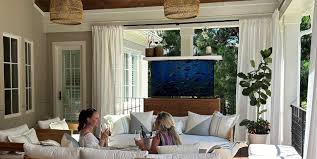
  6. Choosing the Right TV Size for an Outdoor Lift Cabinet

    Outdoor viewing distances, sunlight, and weatherproofing all affect what TV size actually makes sense for your outdoor lift cabinet. Here's how to size it right.

    Outdoor TV sizing follows different logic than indoor sizing, mostly because outdoor spaces tend to have longer viewing distances and more ambient light to compete with.

    Start with viewing distance, not room size

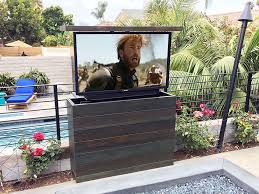
    Outdoor seating areas — patios, decks, poolside lounges — often place viewers farther from the screen than a typical living room does. As a general guide, divide your viewing distance (in inches) by 1.5 to 2.5 to estimate an appropriate screen size; a 12-foot viewing distance (144 inches) suggests something in the 55"-65" range, while a more intimate 8-foot patio setup works well with a 50"-55" screen.

    Sunlight changes the calculus

    Even a well-sized TV can feel washed out in direct afternoon sun. If your outdoor space gets significant direct sunlight during typical viewing hours, prioritize a brighter, sun-readable display

    Posted on: August 02, 2026
    Posted by: Jenn Mann
  7. How Long Do Outdoor TV Lift Cabinets Last?

    Outdoor TV lift cabinets face sun, moisture, and temperature swings that indoor units never see. Here's a realistic look at their lifespan and what affects it most.

    Homeowners considering an outdoor TV lift cabinet almost always ask some version of the same question: is this actually going to hold up, or will I be replacing it in a couple of years? The honest answer depends heavily on materials, climate, and how much genuine cover the cabinet gets — but there are real benchmarks to work from.

    Cabinet shell lifespan

    A well-built HDPE or marine-grade polymer cabinet shell, kept reasonably clear of standing water and not left in constant direct sun without any cover, can realistically last 10+ years without significant material degradation. HDPE doesn't rot, warp with moisture, or support mold growth the way wood does, and it resists UV fading far longer than standard outdoor plastics or laminates.

    The lift mechanism is the real lifespan question

    The cabinet shell tends to outlast the mechanism

    Posted on: July 31, 2026
    Posted by: Jenn Mann
  8. DIY TV Lift Cabinet: Tools and Materials You'll Need

    A complete tools, materials, and mechanism checklist for building your own TV lift cabinet plus the measurement and sequencing mistakes that trip up most DIYer

    Building your own TV lift cabinet is a genuinely doable weekend-to-week project for anyone comfortable with intermediate woodworking, but it goes much more smoothly with a complete materials list in hand before you start, rather than discovering gaps mid-build.

    Full tool list

    • Table saw or circular saw with a straight-edge guide — for breaking down plywood sheets into panel dimensions
    • Drill/driver with a full bit and driver set — for assembly, pilot holes, and hardware installation
    • Router — for cable pass-through holes and any inset panel or edge detailing
    • Jigsaw — specifically for cutting the top opening the TV lifts through, which needs a curved or precise cutout most other saws can't handle
    • Clamps — more than you'll think you need; glue-ups and panel assembly go far more smoothly with adequate clamping capacity
    • Level and tape measure
    Posted on: July 30, 2026
    Posted by: Jenn Mann
  9. Best TV Lift Solutions for RVs and Campers

    RV and camper TV lifts face different demands than home installs vibration, tight clearances, and 12V systems. A complete guide to choosing the right one.

    A TV lift built for a house and a TV lift built for an RV are not interchangeable products, even if they look similar on paper. Life on the road introduces a set of stresses that home installations never face, and the right RV TV lift is engineered specifically around them.

    Why RV installs are fundamentally different

    Constant vibration. Every mile of road puts repeated stress on mounting hardware, guide rails, and electrical connections in a way a stationary home cabinet never experiences. Hardware that would hold indefinitely in a living room can work loose over a season of travel if it isn't rated for vibration resistance.

    Tight, precise cabinetry. RV interiors are built to exact, often smaller dimensions than home furniture. There's rarely slack in the design to accommodate a mechanism that's slightly too tall or too deep measurements

    Posted on: July 28, 2026
    Posted by: Jenn Mann
  10. Hidden TV Cabinet Ideas for Every Room

    From living rooms to home offices, a full room-by-room guide to hidden TV cabinet ideas that keep the screen out of sight until you actually want it.

    A hidden TV cabinet isn't just a living room concept the same idea, a TV that disappears when you're not using it, solves a design problem in nearly every room of the house. Here's how to apply it room by room.

    Living room

    This is the highest-stakes room for the "always-on black rectangle" problem, since it's usually the room guests see first and spend the most time in. A lift cabinet positioned centrally on the main wall, or beside a window where a wall mount wouldn't work well anyway, keeps the room reading as a considered living space rather than a room organized entirely around a screen. Pair the cabinet with real seating arrangement and lighting design, so the room looks complete and intentional with the TV down the TV should feel like a bonus, not the room's reason for being.

    Bedroom

    An end-of-bed lift cabinet (see our dedicated guide)

    Posted on: July 24, 2026
    Posted by: Jenn Mann