
3-D Glasses
-
How Does 3D Work?
 You may have gone to the movie theater in the last two years to watch Avatar in 3-D, or perhaps you waited until it came out in Blu-ray to watch it at home in front of your TV lift cabinet. Regardless, you likely think that 3-D technologies are cool and will clearly be part of the entertainment industry’s future. But have you ever wondered how 3-D works? We uncovered some of the secrets of 3-D technology and we would like to share them.
Have you ever held up a pencil or finger and looked at it with one eye closed, then the other one closed? You’ll see that the image is the same, but it has a different perspective. This is “stereoscopy,” and it’s how the eyes and brain work together to create an impression of a third dimension. Our eyes are roughly 50 mm to 75 mm apart, and each eye takes in a different perspective, triggering the brain to do some crazy geometry to make up for the disparity between both images. It is this disparity that creates “3-D”.
So when we use technology to replicate
Posted on: February 18, 2011Posted by: Kerry Mann -
7 Stylish 3-D Glasses, Something for Everyone
The world of 3-D technology, movies and movie players is clearly on its way to becoming a large part of the industry standard, and something is going to have to be done to mitigate the number of disposable 3-D glasses tossed out after every big-screen release. In fact, nearly 800,000 disposable plastic 3-D glasses were handed out each day during Avatar’s peak in popularity. No one wants all those 3-D spectacles winding up in their area landfill. So what’s the solution? It’s buying your own pair of stylish 3-D glasses and using them at home when watching a 3-D flick in front of your TV lift cabinet, or while you’re with friends at the local theater, or (before long)while you’re at the corner bar watching a 3-D sports event.
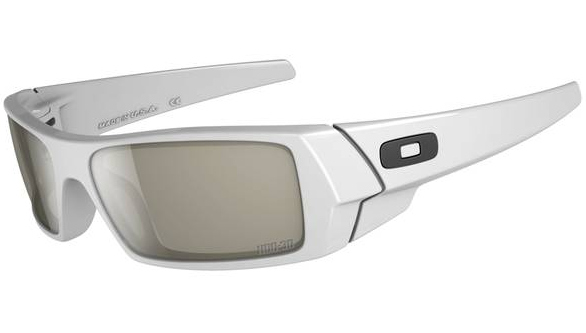
Oakley has been producing some of the most stylish sunglasses in the industry for a long time, and now with the release of their Oakley 3D Gascan, you can be sporting Oakley style day or night.
For something unique in the world of 3-D glasses, consider Look3D’s LK3D252GC
Categories: Press , TV lift cabinet , movies , 3-D Glasses , Look3D , Polaroid , Oakley , Calvin Klein , Gucci'sPosted on: January 31, 2011Posted by: Kerry Mann