
television
-
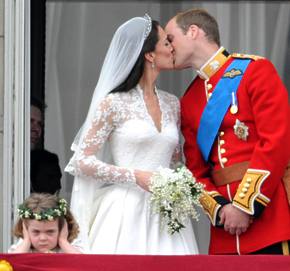
Did you watch Prince William and Kate Middleton's wedding?
 Today is Prince William and Kate Middleton's wedding day. Did you watch it? If so, apparently you are not alone. According to Mailonline.com, an estimated 2 billion people tuned in to watch their wedding from around the world. If you did not get a chance to watch it this morning, we recommend rising the TV lift, turning on the TV, and watching the Royal Wedding highlights tonight. All the major news networks, CNN, ABC, and NBC will be covering it.Posted on: April 29, 2011Posted by: Kerry Mann
 -
How Does Closed Captioning Work?
Whether the acoustics in your room are not top-notch, or you suffer from a hearing-impairment, closed captioning is a helpful tool that aids in the enjoyment of movies and television. But do you know how it works? Does it come through your television, antenna, satellite dish or cable box? If you have a TV lift cabinet, do you have to do any additional wiring or keep your media players in view to keep your closed captioning abilities? Here are the answers.
The ability for closed captioning is already embedded in the signal sent directly to your television, so every show, television movie and commercial comes with the possibility of closed captioning. In order for you to be able to read it, though, it has to be decoded, and that is done by your TV.
Since 1993, every television manufactured that measures over 13 inches must have a built-in decoder, per the Television Decoder Circuitry Act. The information for closed captioning is hidden in the “line 21 data” of your television signal, which
Posted on: December 07, 2010Posted by: Kerry Mann -
Most Soap Opera Ratings on the Rise, Except for One
Soap operas, also called “soaps” for short, are a continuous work of television drama aired in a serial format. The name for these on-going series came from their early days being broadcast as a weekday radio show, which was sponsored by soap manufacturers such as Procter & Gamble, Colgate-Palmolive and Lever Brothers, and played during a time when most of the listeners would be housewives.
By 1976, daytime television became “TV’s richest market,” at least according to Time magazine, primarily due to the soap operas’ dedicated fan base and growth of several series into a full hour slot, instead of a half-hour. The increase in length of the show allowed producers to essentially double the amount of advertising space available for each episode.
However, since the early 1990s daytime soap operas have been on a steady decline. In the 1991-92 TV season, an average of 6.5 million viewers watched “soaps,” but in the 2009-10 TV season, the number dropped to 1.3 million viewers. No new daytime
Categories: Press , television , Big Brother , ratings , Survivor , sweeps , All My Children , soap operasPosted on: December 03, 2010Posted by: Kerry Mann