

Blog
-
How to Design a Multi-Purpose Living Room with a Hidden TV
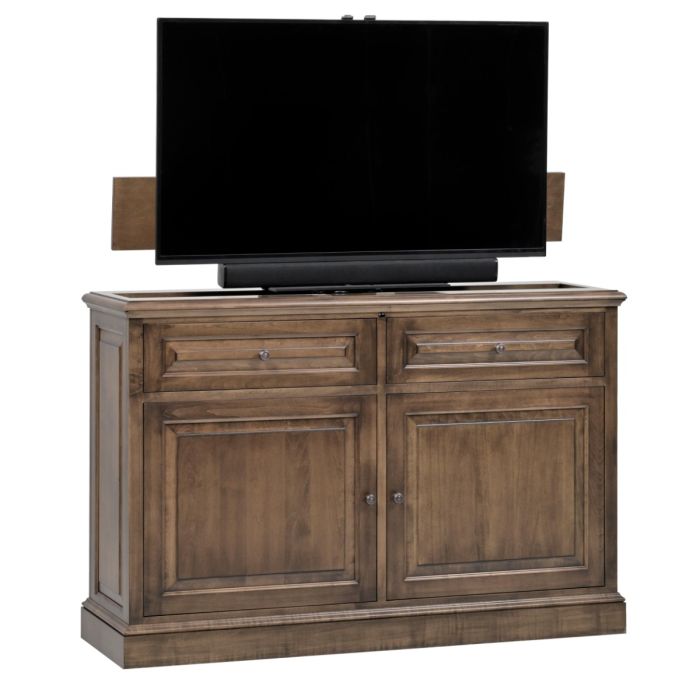
Open floor plans ask a lot of one room. It has to host movie nights, dinner parties, work calls, and kids' playtime, often within the same 300 square feet. A hidden TV is one of the simplest ways to let that room shift roles without a full rearrangement each time.
Start with Zones, Not Furniture
Before picking a cabinet, map out the room's actual uses: conversation area, dining or work area, and entertainment area. A TV lift cabinet works best when it can anchor the entertainment zone without visually claiming the whole room when it's not in use.
Choosing the Right Cabinet for Multi-Use Spaces
- Console cabinets that sit low and wide work well as a room divider between a seating area and a dining or office nook
- Swivel lift mechanisms let one TV serve two zones, useful if your workspace and your couch face different directions
- Cabinets with closed storage keep game consoles, cables, and board games out of sight when the room needs to look like a dining room or office instead
Designing Around
Categories: Your Living Room/Family Room , Living Spaces , Hidden TV , Modern Living , Luxury Living SpacesPosted on: September 03, 2026Posted by: Jenn Mann -
TV Lift Cabinets for the Bedroom: Wake Up to a Room That Doesn't Scream "Media Room"
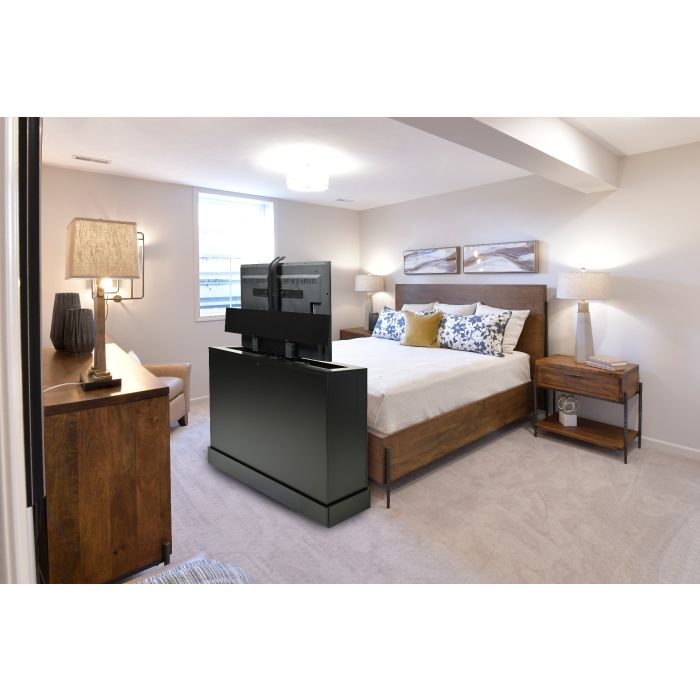
A bedroom with a TV mounted on the wall looks like a media room with a bed in it. A bedroom with a TV lift cabinet looks like a bedroom, until you want it to be something else.
The Problem with a Wall-Mounted Bedroom TV
Most design guidance says to treat the bedroom as a retreat, not an entertainment hub. A blank screen staring back at you from across the room works against that, even when it's off. It changes the visual weight of the space and often ends up dictating furniture placement around it.
How a Lift Cabinet Changes the Room
A TV lift cabinet at the foot of the bed, along a side wall, or built into a dresser keeps the television completely out of sight until you raise it. The room defaults to calm: soft furniture, a dresser, maybe a bench, nothing competing for attention.
Common placements include:
- Foot-of-bed cabinets, which double as a bench or storage dresser
- Dresser-integrated lifts, where the TV rises from a normal-looking dresser top
- Corner cabinets, useful in bedrooms
Posted on: September 01, 2026Posted by: Jenn Mann -
Common TV Lift Cabinet Myths, Debunked
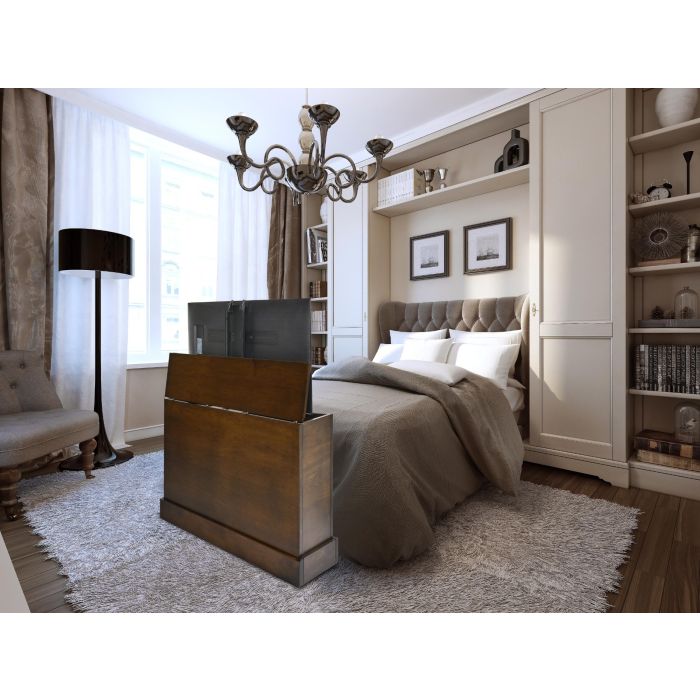
TV lift cabinets have been around long enough to pick up a few outdated assumptions, ones based on how the technology used to work rather than how it actually performs today.
One of the most persistent is the idea that these cabinets are too loud for everyday use. That was a fair criticism years ago, but modern lift mechanisms are engineered specifically for quiet operation. A well-built cabinet is barely noticeable during a lift cycle, quiet enough for bedroom use without disturbing anyone else in the room.
There's also a lingering belief that lift cabinets only belong in high-end custom homes. That hasn't been true for a while. The category has moved well past the custom home theater market, with off-the-shelf models now covering a wide range of budgets and room types, from apartment-scale consoles to full living room pieces. You don't need a custom build to get a hidden TV that works well.
Reliability concerns come up often too, the assumption that a motorized mechanism will inevitably
Posted on: August 31, 2026Posted by: Jenn Mann -
Minimalism Doesn't Mean Giving Up Your TV
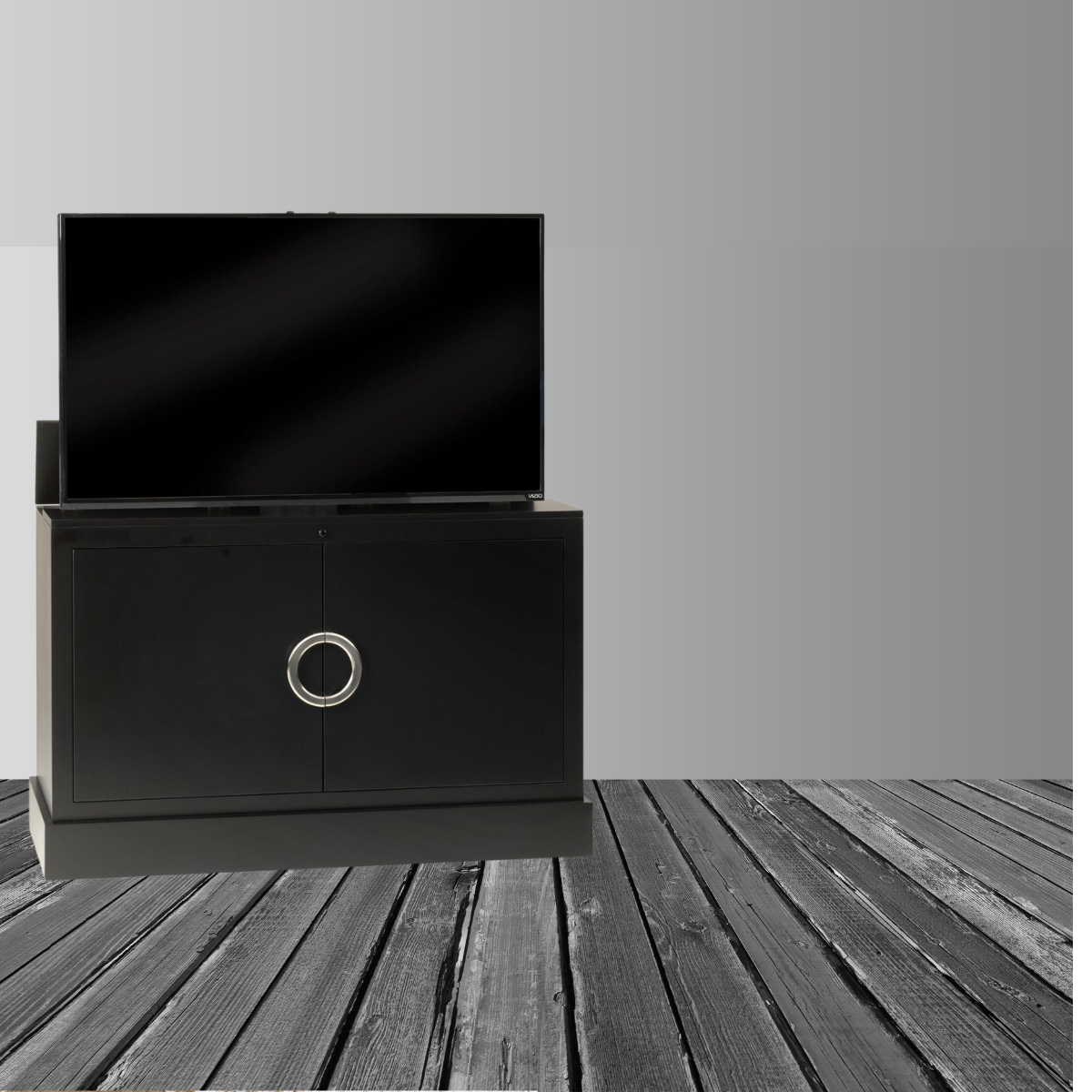
Minimalism gets misunderstood pretty often it's not really about owning less stuff for its own sake, or stripping a room down to the bare essentials just to prove a point. At its core, it's about being intentional with what you actually see and interact with on a daily basis, and removing whatever doesn't earn its place in the room.
Few objects fight harder against that goal than a large, black TV screen sitting out in the open. Even when it's off, it's a visual anchor a dark rectangle that draws the eye and disrupts whatever careful balance of color, texture, and negative space the rest of the room has been built around.
A lift cabinet solves that tension directly. You get to keep the technology you actually use and genuinely want no giving up movie nights or your favorite shows in the name of a design philosophy without it visually competing with everything else you've carefully curated in the space.
It's minimalism without sacrifice, and that distinction matters. You don't have to choose
Posted on: August 30, 2026Posted by: Jenn Mann -
The Gift That Upgrades an Entire Room
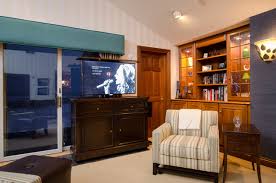
Buying a gift for the couple who genuinely seems to have everything is one of the harder shopping challenges out there. Most of the obvious options end up feeling either too generic to be memorable or too personal to get right without knowing someone extremely well. A TV lift cabinet manages to avoid both of those traps.
It's not just another accessory or decorative object that ends up in a closet within a year — it meaningfully upgrades an entire room. The recipient gets a genuine piece of furniture that improves how their living room, bedroom, or den actually functions on a day-to-day basis, not just something that looks nice sitting on a shelf.
On top of the practical value, there's the fun, slightly unexpected wow-factor built right in. A TV that rises and disappears on command isn't something most people are expecting to unwrap, and it tends to generate exactly the kind of reaction that makes a gift memorable — the kind of piece that gets shown off to visitors for years afterward,
Categories: Your Living Room/Family Room , room makeover , room design , living rooms , living room designPosted on: August 27, 2026Posted by: Jenn Mann -
A Living Room Transformation: Before and After
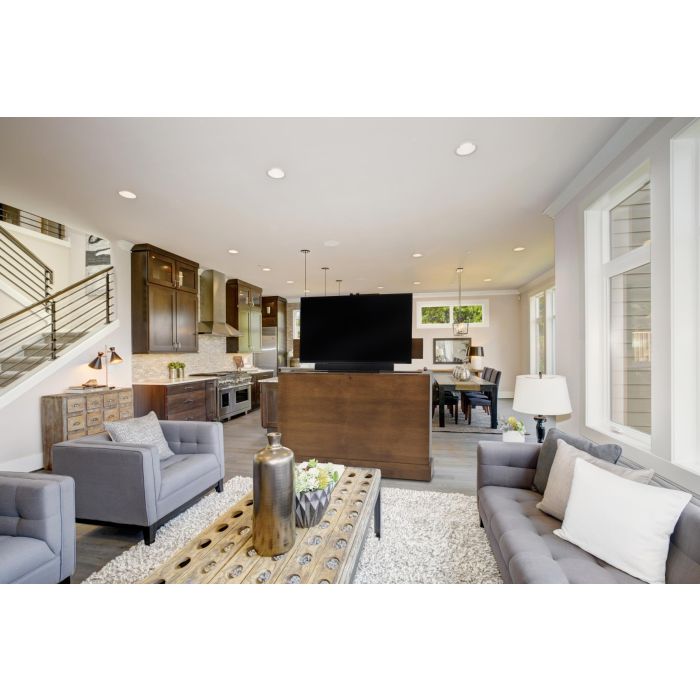
Picture the "before": a bulky entertainment center anchoring one whole wall of the room, cords snaking out from behind it in every direction, a cable box and a gaming console and a soundbar all stacked in full view. The TV itself is impossible to ignore no matter where you're sitting, and no amount of careful furniture arrangement around it changes that basic fact.
It's a setup that works, in the sense that everything's plugged in and functional but it's rarely the room people picture when they imagine their dream living space. It looks like a room built around a television, because, functionally, it is one.
Now picture the "after." A single, clean cabinet sits in that same spot. No visible cords snaking anywhere. No mismatched media furniture stacked around the perimeter trying to disguise itself. No oversized black rectangle pulling focus away from the rest of the room the second you walk in. The television is completely hidden until someone actually wants to use it.
The difference isn't
Categories: Your Living Room/Family Room , living room , Living Spaces , Clutter Free Living , Luxury Living Spaces , living room TV lift cabinet , TV lift living roomPosted on: August 25, 2026Posted by: Jenn Mann -
Giving Your Guest Room a TV Without Making It Feel Like a Hotel
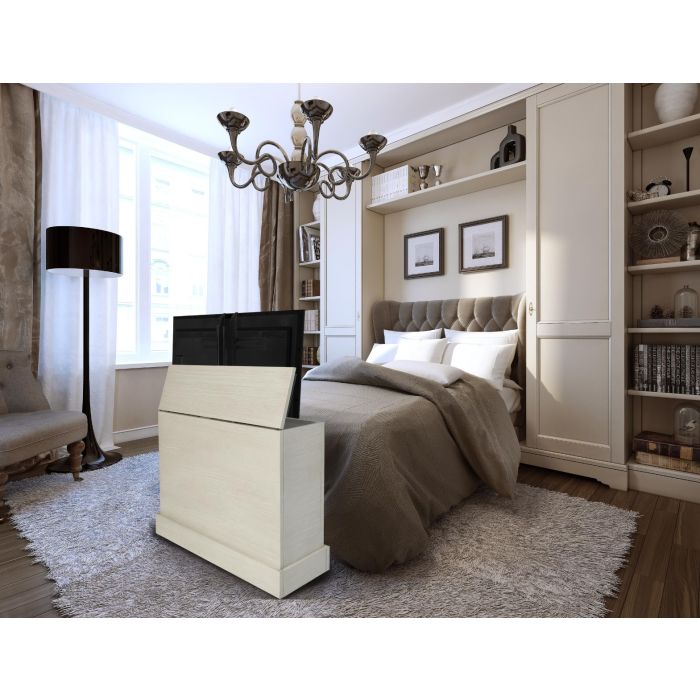
Furnishing a guest room is always a bit of a balancing act. You want the people staying with you to feel genuinely taken care of, which for most guests means having access to a TV during their stay. But you also don't want the room to feel like a generic hotel room that happens to be located inside your house.
A lift cabinet threads that needle better than almost any other option available. Because it doubles as a functional dresser or media console, it earns its place in the room even on the many days when no one's staying over extra storage for out-of-season clothes or spare linens, a surface for a lamp or a few thoughtful decorative pieces, furniture that actually fits the rest of your home's design language instead of standing out as "the guest room TV setup."
When guests do arrive, they get the added bonus of a television they can raise for movie night, a quiet morning show, or background noise while they're getting ready without that screen being a permanent visual fixture in the
Posted on: August 22, 2026Posted by: Jenn Mann -
How a TV Lift Cabinet Actually Works
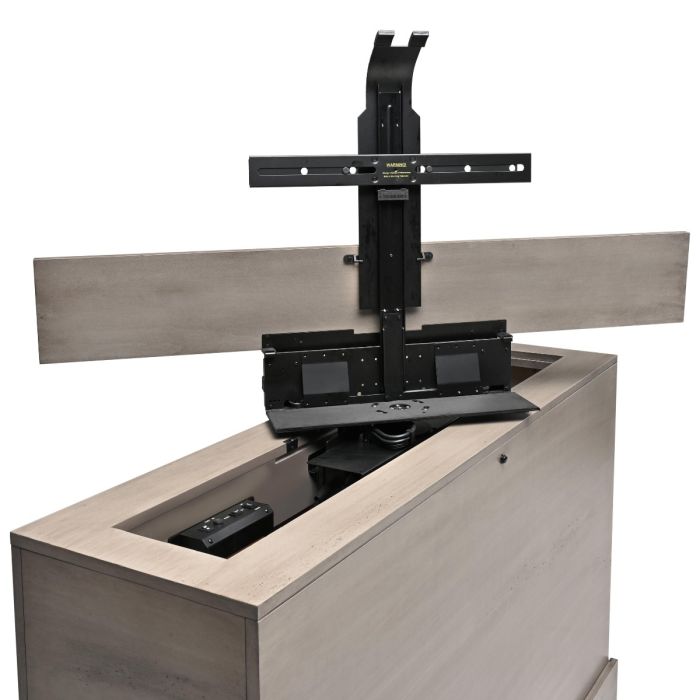
If you've never seen a TV lift cabinet in action, the mechanism behind it is a lot simpler than most people expect. Press a button on the included remote, and a quiet, motorized lift mechanism rises smoothly out of the cabinet, carrying the television up and into full viewing position over the course of just a few seconds.
There's no manual lifting involved, no fumbling with wall brackets, and no exposed hardware once everything is installed and set up. The entire lift assembly is built into the cabinet itself a self-contained system that handles the raising and lowering without any additional equipment cluttering the room.
Press the same button again once you're finished watching, and the mechanism lowers the screen right back down into the cabinet, out of sight and fully protected. Most lifts are engineered to run quietly enough that they don't interrupt whatever else is happening in the room no jarring mechanical noise, no drawn-out process.
From the outside, before that first button
Categories: TV Cabinets , foot of the bed TV Lift Cabinets , tv lift cabinets. TV Lifts , latest tv lift cabinets , rv tv lift cabinet , tv cabinet designPosted on: August 20, 2026Posted by: Jenn Mann -
Outdoor Entertaining Without Exposing Your TV to the Weather

Patio movie nights. Backyard game days that stretch into the evening. A pool party with the game on in the background while everyone floats around and grazes on snacks. Outdoor entertaining hits differently when there's a screen involved it turns a normal gathering into an event people actually plan their weekend around.
The problem has always been exposure. Leaving a TV out on a patio or deck, uncovered and unprotected, is asking for trouble sun exposure fades and damages screens over time, rain and humidity are even worse, and even a covered patio doesn't fully protect electronics from temperature swings and moisture in the air.
An outdoor-rated TV lift cabinet solves that problem at the source by keeping the screen fully enclosed and protected until the moment it's actually needed. Closed up, it functions as weather-resistant outdoor furniture built to handle the elements the way a good piece of patio furniture should. Opened up, you've got a complete entertainment setup ready for the
Categories: outdoors , Outdoor TV Lift Cabinet , Outdoor Casual TV Lift Cabinet , OutdoorEntertainment , outdoor TV lift cabinetPosted on: August 19, 2026Posted by: Jenn Mann -
It Shows Up Built. Actually Built

Nobody wants to spend their Saturday afternoon on the floor of their own living room, surrounded by cardboard, squinting at a black-and-white instruction diagram, hunting for the one missing Allen wrench that somehow didn't make it into the hardware bag. That entire experience simply doesn't exist with a TVLiftCabinet.com order.
Every cabinet arrives pre-assembled not "some assembly required," not "minor assembly," fully built, exactly as it was constructed in the shop. There are no flat-pack panels to align, no cam locks to tighten, no YouTube tutorial required to figure out which side is supposed to face the wall.
On top of that, delivery includes free white-glove service, meaning the cabinet is carried into your home, positioned exactly where you want it, and set up by a delivery team that actually knows how to handle a piece this substantial. You're not signing for a stack of boxes left on your porch and hoping for the best.
That level of service matters even more given what's inside
Posted on: August 16, 2026Posted by: Jenn Mann